
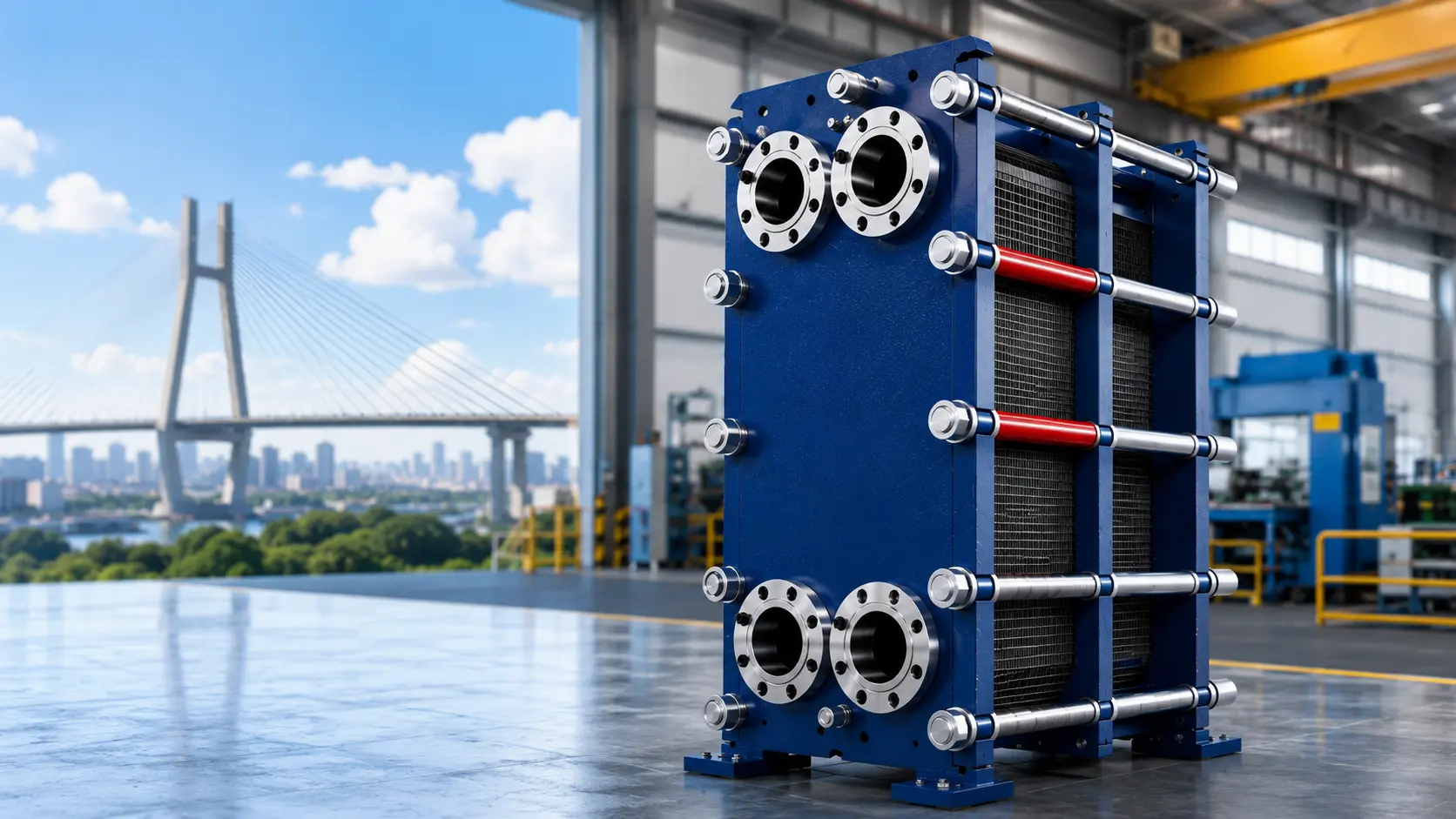
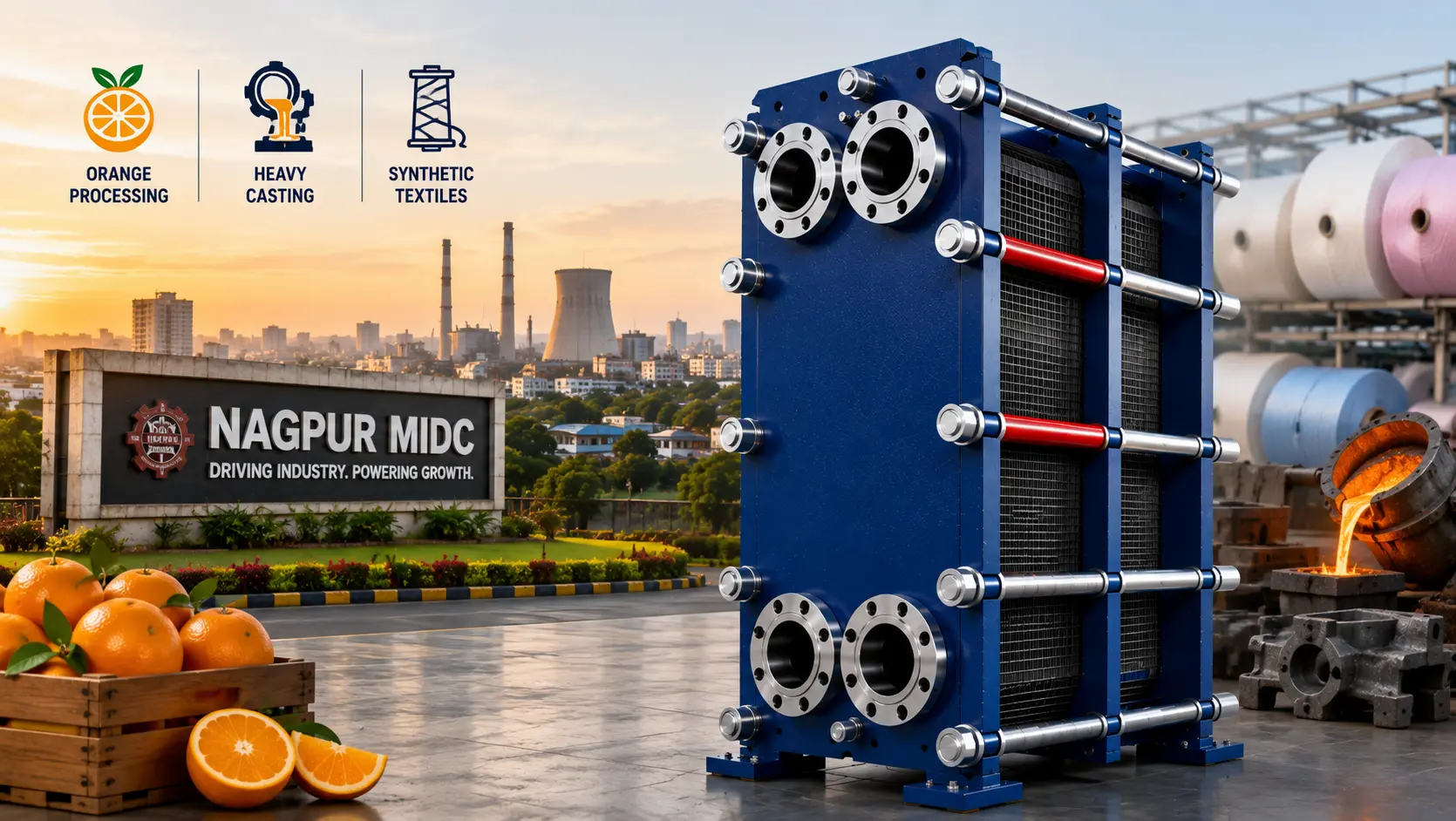
Nagpur carries two identities that rarely sit together in one district — it’s the “Orange City,” famous for the GI-tagged Nagpur orange and now home to one of Asia’s largest orange-processing plants, and it’s also a serious heavy-industry base built around casting, synthetic textiles, and explosives manufacturing. Sitting at India’s geographic “Zero Mile” center with strong rail, road, and air connectivity through MIHAN, the district’s industrial base spreads across Hingna, Butibori, and Kalmeshwar, each with its own dominant duty. Sourcing plate heat exchanger manufacturers in Nagpur MIDC well means recognising that a specification built for one of these zones can be entirely wrong for another.
Comparing PHE Demand Across Nagpur’s Industrial Zones
| Zone | Dominant Industry | Typical PHE Duty | What Matters Most |
| Hingna | Casting, tractors, auto components, confectionery | Furnace/quench cooling, process heating | Particulate-resistant plates for foundry duty |
| Butibori | Synthetic textiles, power generation, steel | Heat-setting, dyeing, thermal plant auxiliary cooling | High-throughput, continuous-duty construction |
| Kalmeshwar | Orange cultivation, agro-processing | Juice heating, cooling for fruit processing | Food-grade hygiene and gasket compliance |
| Nagpur city (MIHAN belt) | Orange & dal processing, explosives, logistics | Food-grade pasteurization, general process cooling | Documentation for large-scale export-oriented plants |
Plate Heat Exchanger Manufacturers in Hingna
Hingna is home to hundreds of small and medium industrial units, anchored by a tractor manufacturing plant and casting operations from one of India’s largest foundry groups, alongside auto-component and confectionery manufacturing. That mix means duty types genuinely diverge within the same estate: foundry and casting operations need particulate-resistant cooling circuits similar to any heavy casting cluster, while confectionery manufacturing — precise temperature control for sugar and chocolate processing — needs food-grade hygiene standards entirely unrelated to foundry duty.
A plate heat exchanger manufacturer in Hingna needs to ask which of these two very different worlds your plant belongs to, because a foundry-grade unit and a confectionery-grade unit share almost nothing beyond the basic operating principle. For foundry-heavy estates like this, the right plate heat exchanger manufacturers in Nagpur MIDC spec particulate-resistant plates from the outset. That local focus is what sets apart trusted plate heat exchanger manufacturers in Nagpur MIDC.
Plate Heat Exchanger Suppliers in Butibori
Butibori is reportedly Asia’s largest industrial area by notified land, hosting a mix of synthetic textile manufacturing, a major thermal power station, and steel and casting units. Synthetic polyester yarn production involves heat-setting and dyeing stages that run at different temperatures and chemical exposure than natural-fibre textile processing, and the power plant’s auxiliary systems add oil-cooling and general utility cooling duty into the same estate. This diversity is exactly why experienced plate heat exchanger manufacturers in Nagpur MIDC keep a broad plate and gasket inventory on hand.
A plate heat exchanger supplier in Butibori covering an estate this large and this industrially diverse needs a genuinely broad plate and gasket inventory — a synthetic-fibre dyeing line, a thermal plant’s auxiliary cooling loop, and a steel unit’s process water circuit don’t share a single specification, even though all three might be a few kilometres apart.
PHE Gasket Manufacturers in Kalmeshwar
Kalmeshwar sits within Nagpur’s core orange-growing belt, alongside neighbouring talukas like Katol and Narkhed, and carries real potential for orange-based agro-processing beyond raw cultivation. Fruit-processing equipment — juice extraction, pasteurization, and cooling lines — needs food-grade gasket compounds rated for fruit acids and regular CIP cleaning, a different chemistry entirely from the general industrial gaskets common to Hingna or Butibori. A PHE gasket manufacturer in Kalmeshwar serving this belt needs food-contact-compliant compounds as the default assumption, not an upgrade option, given how directly this taluka’s economy ties to fruit processing. For juice and pulp lines here, the best plate heat exchanger manufacturers in Nagpur MIDC prioritise food-grade hygiene and gasket compatibility.
PHE Gasket Suppliers in Nagpur
Nagpur city and the wider MIHAN belt have recently taken this orange-processing story to industrial scale — a large new orange-processing facility at MIHAN, designed around zero-waste principles that extract value even from fruit peel, alongside a long-established cluster of over a hundred dal (pulse) processing mills in the city’s Bagadganj area. Both of these run food-grade heat transfer duty at meaningful volume, and both are increasingly export-oriented, which raises the documentation bar the same way it does in any export-focused manufacturing hub. A PHE gasket supplier in Nagpur serving this scale of food processing needs to treat material test certificates and hygiene compliance documentation as standard, not optional paperwork assembled only when a customer asks.
Getting Plate Material and Gasket Compound Right
Across Nagpur’s zones, plate and gasket selection tracks industry more than geography. Foundry and casting duty in Hingna generally runs on SS304 plates, with particulate-resistant construction like a wide-gap plate heat exchanger worth considering for return water carrying sand or metal fines. Butibori’s synthetic textile and power-plant duty often needs SS316 given chemical exposure in dyeing and oil-contact in auxiliary cooling systems, and for continuous, high-throughput operation, a welded plate heat exchanger construction frequently outperforms a standard gasketed unit.
Kalmeshwar and the MIHAN food-processing belt need food-grade SS316 with CIP-rated elastomers as a baseline. Whatever the duty, ask for material test certificates and pressure test documentation — manufacturers working within ISO 9001 quality frameworks, and referencing thermal design guidelines from bodies like ASHRAE, give you something documented to rely on. The MIDC official portal remains the authoritative source for confirming an estate’s status anywhere across the district. This makes proven food-grade experience a key filter when shortlisting plate heat exchanger manufacturers in Nagpur MIDC.
Maintenance Across Four Different Duty Profiles
A gradually rising pressure drop at constant flow rate is the universal early warning sign of fouling, but the cause differs by zone. In Hingna’s foundry duty, it’s usually particulate buildup from sand or metal fines. In Butibori’s textile and power-plant applications, it’s typically dye residue or oil contamination depending on the circuit. In Kalmeshwar and the MIHAN food-processing belt, it’s organic residue that needs a properly concentrated CIP cycle to clear.
A visual check every 3–6 months, with a full teardown and gasket inspection every 12–18 months, is a reasonable baseline everywhere — continuous-duty foundry, power, and large-scale food-processing operations often need the shorter end of that range. External leaks trace back to gasket seating or uneven bolt torque far more often than to the plates themselves.
What a Fair Quote Should Include
Plate material, gasket compound, heat transfer area, and frame/connection size should appear as separate line items on any quote, regardless of which zone you’re sourcing for. SRJ Heatt Exchangers India Pvt. Ltd. builds its quoting approach around this range of duty — sizing plate and gasket selection differently for a foundry circuit in Hingna, a synthetic-textile or power-plant application in Butibori, or a food-grade line in Kalmeshwar or the MIHAN belt, with replacement parts stocked so buyers across the district aren’t left waiting weeks for a routine part. Comparing quotes on these line items is the fastest way to separate serious plate heat exchanger manufacturers in Nagpur MIDC from the rest.
Conclusion
Nagpur’s dual identity — Orange City on one side, heavy casting and synthetic-textile hub on the other — means plate heat exchanger manufacturers in Nagpur MIDC need to cover genuinely different ground across Hingna, Butibori, Kalmeshwar, and the MIHAN food-processing belt. Match plate material and gasket compound to the actual duty, and equipment life stops being a guessing game across a district this industrially varied.
FAQs
Why does Hingna need different PHE specifications depending on which unit is asking? Hingna hosts both foundry/casting operations and food-grade confectionery manufacturing, which need almost entirely different plate and gasket specifications despite sitting in the same estate.
What makes Butibori’s sourcing needs unusual? As one of Asia’s largest industrial areas, Butibori combines synthetic textile manufacturing, power generation, and steel production, each with its own duty profile — a single generic spec doesn’t cover the estate.
Does Kalmeshwar’s orange-growing economy affect PHE sourcing? Yes — fruit-processing equipment needs food-grade gasket compounds resistant to fruit acids, a different chemistry from general industrial applications common elsewhere in the district.
Why does documentation matter more for Nagpur’s larger food-processing plants? Large-scale orange and dal processing facilities, particularly export-oriented ones near MIHAN, are increasingly held to hygiene and material documentation standards similar to any export-focused manufacturing hub.
Should I choose SS304 or SS316 plates? SS304 generally suits foundry cooling water in Hingna; SS316 is the safer baseline for Butibori’s chemical-exposed textile duty and for any food-grade application in Kalmeshwar or the MIHAN belt.
What should I ask for before accepting a quote? Material test certificates, pressure test documentation, and a line-item breakdown covering plate material, gasket compound, frame, and freight.