Industrial systems depend heavily on efficient thermal transfer equipment to maintain productivity, energy efficiency, and operational safety. Over time, however, fouling, gasket wear, corrosion, pressure imbalance, and improper maintenance can reduce performance and increase downtime risks. Understanding how to repair plate type heat exchanger systems correctly is essential for industries such as food processing, chemical manufacturing, HVAC, marine, pharmaceutical, refinery, dairy, textile, and energy plants.
This detailed guide explains professional repair methods, inspection procedures, common failures, preventive maintenance strategies, and expert recommendations for extending equipment lifespan while maintaining operational reliability.
SRJ Heatt Exchangers India Pvt. Ltd. specializes in industrial thermal transfer solutions, replacement plates, gasket solutions, servicing, and refurbishment support for multiple industrial applications.
What Is a Plate Type Heat Exchanger?
A plate type heat exchanger is a compact thermal transfer system that uses corrugated metal plates and sealing gaskets to transfer heat between fluids efficiently. These systems are widely used because of their:
- Compact design
- High thermal efficiency
- Easy maintenance access
- Lower energy consumption
- Flexible capacity expansion
- Reduced installation footprint
Industries prefer these systems because they provide efficient thermal transfer with minimal operational cost while supporting hygienic and high-pressure applications.
Why Repairing a Plate Type Heat Exchanger Matters
Ignoring maintenance or delaying repairs can lead to:
- Reduced thermal efficiency
- Fluid contamination
- Pressure loss
- Production downtime
- Increased energy bills
- Internal leakage
- Premature equipment failure
Professional repair and reconditioning help restore performance while reducing replacement costs.
Common Signs Your Heat Exchanger Needs Repair
Understanding early warning signs helps prevent major operational failures.
1. Drop in Heat Transfer Efficiency
If outlet temperatures are inconsistent or heating/cooling performance drops, internal fouling or damaged plates may be restricting thermal transfer.
Common Causes
- Scale buildup
- Plate fouling
- Flow blockage
- Improper gasket sealing
2. External Leakage
Visible fluid leakage around the frame or plate pack usually indicates gasket failure, improper tightening, or plate damage.
Possible Reasons
- Aging gaskets
- Incorrect compression
- Chemical degradation
- Thermal stress
3. Pressure Drop Increase
Abnormal pressure loss often points to internal blockage caused by dirt, sludge, or scaling deposits.
4. Fluid Mixing
Cross-contamination between fluids indicates internal plate cracking or gasket failure.
This issue requires immediate shutdown and inspection.
5. Corrosion or Plate Damage
Corrosion weakens the plates and eventually creates pinholes or structural failure.
Main Causes of Plate Heat Exchanger Failure
Fouling and Scaling
Mineral deposits, sludge, biological contaminants, and process residues reduce thermal efficiency.
Industries handling hard water or process chemicals face this issue frequently.
Improper Cleaning Methods
Using aggressive tools or incorrect chemical concentrations can damage plates permanently.
Improper cleaning is one of the most common reasons for premature equipment failure.
Thermal Fatigue
Continuous temperature fluctuations create expansion stress that weakens plates and gasket joints.
Incorrect Installation
Improper tightening dimensions or misaligned plates reduce sealing effectiveness.
Poor Maintenance Practices
Delayed servicing increases wear and allows small issues to become major operational failures.
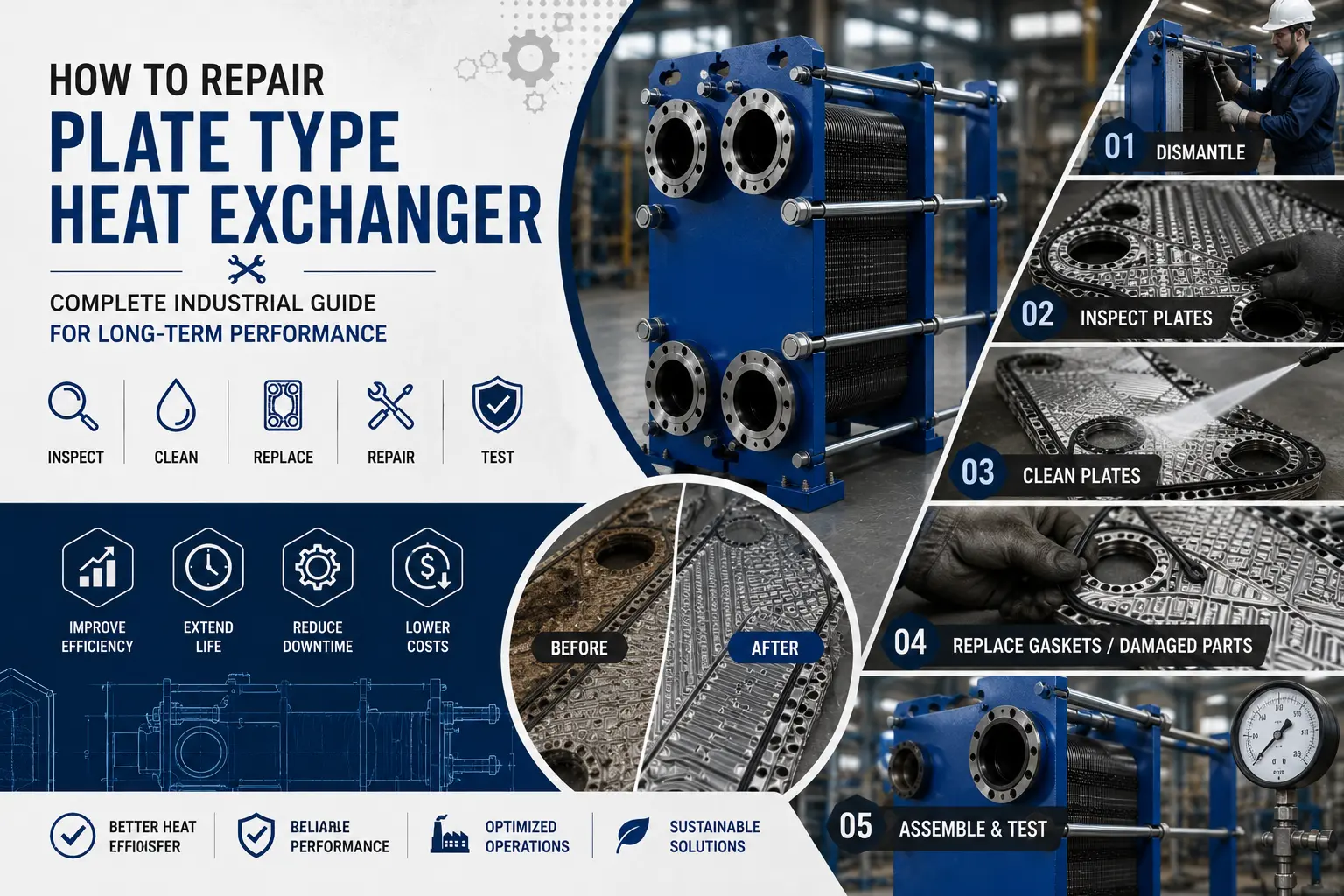
Step-by-Step Process: How to Repair Plate Type Heat Exchanger
Step 1: System Shutdown and Isolation
Before beginning repair work:
- Shut down the system completely
- Depressurize safely
- Drain all fluids
- Disconnect energy sources
- Follow industrial safety procedures
Safety compliance is critical during maintenance operations.
Step 2: Opening the Unit
The frame bolts are loosened carefully to access the plate pack.
Technicians should:
- Record tightening dimensions
- Maintain plate arrangement order
- Label plates for reassembly
Incorrect sequencing can affect flow performance later.
Step 3: Plate Inspection
Each plate is inspected for:
- Cracks
- Corrosion
- Erosion
- Deformation
- Pinholes
- Fouling buildup
Advanced inspection methods may include:
- Dye penetrant testing
- UV crack detection
- Pressure testing
Step 4: Gasket Inspection
Gaskets are checked for:
- Hardening
- Swelling
- Chemical attack
- Compression loss
- Detachment
Damaged gaskets must be replaced immediately.
Step 5: Professional Cleaning
Cleaning depends on contamination severity.
Mechanical Cleaning
Used for removable deposits.
Chemical Cleaning
Used for:
- Calcium scaling
- Oil contamination
- Biological fouling
- Process deposits
Only approved industrial cleaning chemicals should be used to avoid plate damage.
Step 6: Plate Repair or Replacement
Minor issues may be repaired, while severely damaged plates require replacement.
Common Repairs
- Crack treatment
- Edge correction
- Surface refinishing
If plate integrity is compromised, replacement is the safest solution.
Step 7: Regasketing Process
Old gaskets are removed carefully and new industrial-grade gaskets are installed using proper adhesive or clip-on methods.
Correct gasket alignment is essential for leak prevention.
Step 8: Reassembly
The plate pack is reassembled in the correct sequence and compression dimensions are restored according to manufacturer specifications.
Improper tightening may result in:
- Leakage
- Plate distortion
- Reduced performance
Step 9: Pressure Testing
Hydraulic or pneumatic testing verifies:
- Leak-free operation
- Structural stability
- Correct sealing
Testing ensures safe return to operation.
Step 10: Performance Validation
Final checks include:
- Flow verification
- Temperature validation
- Pressure monitoring
- Operational inspection
Best Cleaning Methods for Plate Type Heat Exchanger
CIP Cleaning (Clean-in-Place)
Suitable for light-to-moderate fouling without dismantling.
Advantages
- Reduced downtime
- Lower labor requirement
- Faster maintenance
Manual Cleaning
Recommended for severe contamination or heavy scaling.
Chemical Descaling
Used for:
- Calcium deposits
- Rust accumulation
- Industrial residue
Acid concentration and cleaning duration must be controlled carefully.
Professional Repair vs DIY Repair
Many operators attempt low-cost repairs internally, but improper servicing often creates larger failures.
Risks of DIY Repair
- Plate scratching
- Incorrect gasket installation
- Improper tightening
- Chemical damage
- Flow imbalance
- Increased leakage risk
Professional industrial servicing ensures:
- Accurate diagnostics
- Proper cleaning procedures
- Correct torque specifications
- Reliable sealing performance
Preventive Maintenance Tips
Preventive maintenance significantly extends operational life.
Recommended Maintenance Practices
Regular Inspection
Inspect for:
- Leakage
- Corrosion
- Temperature deviation
- Pressure changes
Water Quality Monitoring
Poor fluid quality accelerates scaling and corrosion.
Scheduled Cleaning
Routine cleaning prevents severe fouling accumulation.
Gasket Monitoring
Replace aging gaskets before failure occurs.
Record Operating Conditions
Maintain service history and performance logs.
Industries That Require Frequent Heat Exchanger Repair
Food and Beverage
Frequent cleaning cycles and hygiene standards demand regular servicing.
Chemical Industry
Aggressive chemicals increase gasket and plate wear.
Marine Applications
Saltwater environments accelerate corrosion risk.
Oil and Gas
High pressure and temperature conditions create severe operational stress.
HVAC Systems
Commercial cooling systems require periodic efficiency restoration.
How Long Does a Plate Heat Exchanger Last?
Lifespan depends on:
- Fluid quality
- Operating temperature
- Maintenance frequency
- Material grade
- Process conditions
With proper servicing and scheduled maintenance, industrial systems can operate efficiently for many years.
Choosing the Right Repair Service Provider
When selecting a service partner, evaluate:
Technical Expertise
Choose experienced industrial specialists with proven repair capability.
Availability of Replacement Parts
Reliable spare support reduces downtime.
Inspection Capability
Advanced testing improves repair accuracy.
Industry Experience
Different industries require different servicing approaches.
Emergency Support
Fast response minimizes production loss.
Why Industrial Operators Prefer Professional Reconditioning
Professional refurbishment provides:
- Lower capital cost
- Faster turnaround
- Restored thermal efficiency
- Improved operational safety
- Extended equipment life
SRJ Heatt Exchangers India Pvt. Ltd. provides industrial thermal transfer solutions, replacement parts, and servicing support for multiple industrial sectors including refinery, marine, dairy, HVAC, textile, pharmaceutical, chemical, and energy plants.
Frequently Asked Questions
How often should a plate type heat exchanger be cleaned?
Cleaning frequency depends on operating conditions, fluid quality, and contamination levels. Industrial systems often require scheduled inspection and periodic cleaning to maintain efficiency.
Can damaged plates be repaired?
Minor damage may sometimes be repaired, but severely cracked or corroded plates should be replaced to ensure safe operation.
What causes gasket failure?
Common causes include:
- Aging
- Chemical attack
- High temperature
- Improper compression
- Thermal cycling
Why is thermal efficiency decreasing?
The most common reasons include:
- Fouling
- Scaling
- Flow restriction
- Internal leakage
- Plate damage
Is chemical cleaning safe?
Yes, when performed using approved industrial procedures and controlled chemical concentrations.
Final Thoughts
Understanding how to repair plate type heat exchanger systems properly is essential for maintaining operational efficiency, reducing downtime, and preventing costly failures. Professional inspection, proper cleaning, accurate regasketing, and preventive maintenance all play a major role in extending equipment life and improving industrial productivity.
Industries that prioritize scheduled maintenance and expert servicing benefit from:
- Better thermal efficiency
- Reduced operating costs
- Lower downtime risk
- Longer equipment lifespan
- Improved process reliability
For industrial operations where performance and reliability matter, professional refurbishment and maintenance remain the most cost-effective long-term solution.