
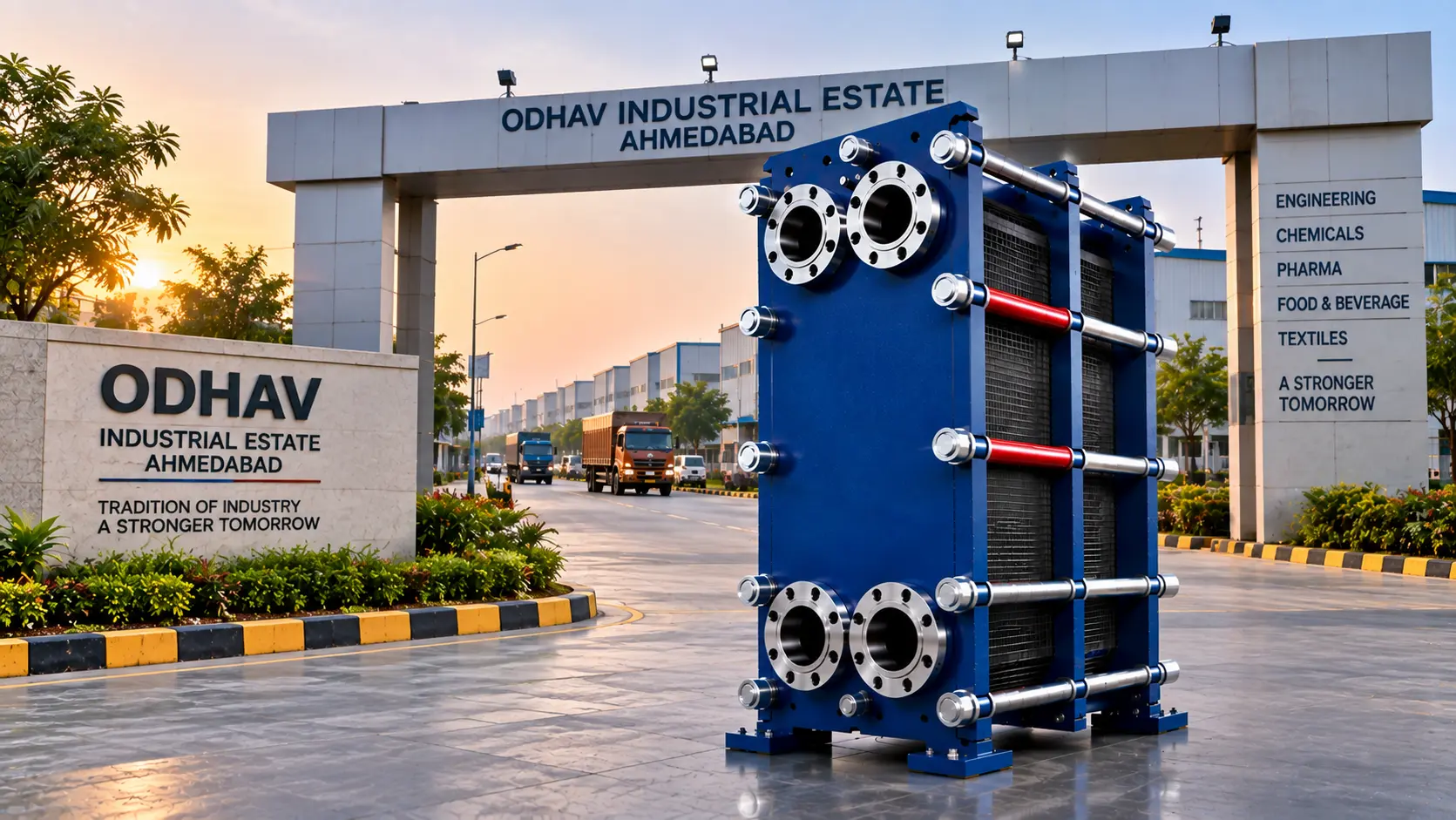
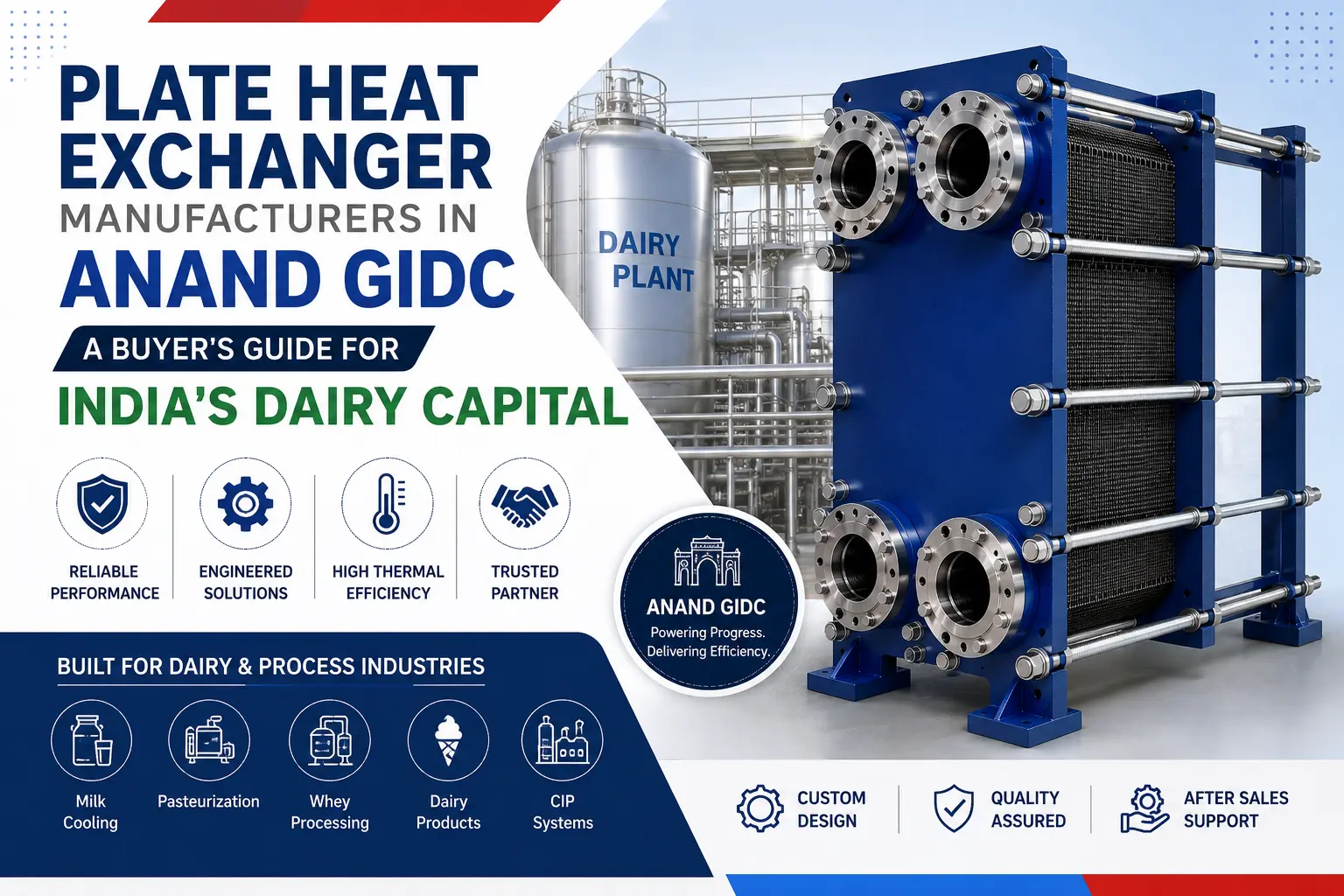
Anyone searching for plate heat exchanger manufacturers in Anand GIDC is almost certainly buying for a demanding application. Anand is the home of India’s dairy movement, and the district’s industrial estates — Vitthal Udyognagar (V.U. Nagar), Borsad, Petlad, and Khambhat — are packed with dairies, food processors, agro units, and engineering workshops that live or die by hygienic, reliable heat transfer. This guide covers what a food-grade PHE really requires, how to compare local suppliers, where to source gaskets, and why plants across Charotar trust SRJ Heatt Exchangers India Pvt. Ltd. for both new units and spares.
What Makes Anand’s PHE Requirements Different
In most industrial belts, a plate heat exchanger is a utility item — an oil cooler here, a water circuit there. In Anand district, the PHE often touches the product itself. Milk pasteurisers, cream coolers, curd and buttermilk chillers, juice heaters, and CIP (clean-in-place) heating loops all run on plate packs. That changes the buying checklist completely:
- Food-contact materials: Plates in SS316 or SS316L with a sanitary surface finish; no copper-brazed units on product lines.
- Food-grade gaskets: NBR or EPDM compounds with food-safe certification, since the gasket sits in direct contact with milk or juice.
- Cleanability: The unit must withstand daily CIP cycles with hot caustic and acid without gasket degradation.
- Regeneration sections: Dairy pasteurisers use multi-section PHEs where raw milk is preheated by outgoing pasteurised milk — a design skill many general fabricators simply don’t have.
A supplier who understands these four points is worth talking to. One who quotes a generic water-to-water cooler for a milk duty is not.
How to Compare Plate Heat Exchanger Manufacturers in Anand GIDC
Anand has genuine manufacturing depth — V.U. Nagar hosts established dairy-equipment makers — but capability varies widely. Use this framework before placing an order:
1. Ask Who Does the Thermal Design
A correctly sized PHE starts from your heat load, flow rates, and temperature programme. Request the thermal datasheet showing heat transfer area, pressure drop on both sides, and fouling margin. Traders reselling imported plate packs usually cannot produce one.
2. Check Multi-Section and Duty Experience
For pasteurisation or regeneration duties, ask for reference installations with similar section counts and capacities (LPH). For utility duties — chilled water, hot water, oil cooling — a simpler single-section unit is fine, but sizing still matters.
3. Verify Spares Logistics
Plates crack and gaskets age; that’s normal. What matters is whether your supplier stocks compatible plates and gaskets locally or makes you wait weeks. Downtime on a pasteuriser during peak milk procurement season is not a small problem.
4. Insist on Testing and Documentation
Hydro-testing before dispatch, material test certificates for plates, and food-grade compliance documents for gaskets should come standard from any serious manufacturer.
Plate Heat Exchanger Manufacturers in V. U. Nagar: The District’s Engineering Hub
Vitthal Udyognagar is where most of Anand’s process-equipment expertise is concentrated, so buyers naturally look for plate heat exchanger manufacturers in V. U. Nagar first. The estate’s strength is dairy and food machinery, which means local knowledge of sanitary design is genuinely good. Two practical tips for buyers here: first, compare manufacturer-direct pricing against dealer quotes — the gap on identical specifications can be 15–25%. Second, ask whether the quoted unit is expandable; a frame sized with spare capacity lets you add plates later as your processing volume grows, instead of buying a new exchanger.
Plate Heat Exchanger Suppliers in Borsad: Utility and Agro Duties
Enquiries for plate heat exchanger suppliers in Borsad typically come from agro-processing, cold storage, and small dairy units. The most common needs are milk chilling against ice water, condenser/desuperheater duties on refrigeration plants, and hot-water generation. For these duties, a compact gasketed PHE in SS316 with NBR gaskets is usually the right answer — but insist the supplier sizes it for your worst-case summer inlet temperatures, not the catalogue rating. An undersized chiller PHE shows up exactly when you need it most: peak summer procurement.
PHE Gasket Manufacturers in Petlad: Reading Gasket Failure Correctly
Petlad’s processing units generate steady demand for spares, which is why searches for phe gasket manufacturers in Petlad are so common. Before ordering, diagnose why the old gaskets failed:
- Hardened, cracked lips → thermal ageing; normal end of life.
- Swollen, soft gaskets → chemical attack; the compound doesn’t suit your CIP chemicals or product. Switch from NBR to EPDM (or Viton for aggressive media).
- Gaskets popping out of grooves → over-tightening or wrong profile; re-check the plate model before blaming the rubber.
Always order by plate make, model, and gasket profile. Food-contact duties need certified food-grade compounds — ask for the compliance document, not just a verbal assurance.
PHE Gasket Suppliers in Khambhat: Chemical-Side Considerations
Khambhat’s industrial mix leans toward chemicals, salt-based processing, and plastics, so phe gasket suppliers in Khambhat field different questions: chloride exposure, brine duties, and higher temperatures. Two rules protect your plate pack here. Standard NBR hardens quickly in hot brine service — EPDM or HNBR lasts significantly longer. And if chlorides are present, inspect plates for pitting every time you regasket; replacing a ₹2,000 gasket on a pitted plate wastes both.
Where SRJ Heatt Exchangers India Pvt. Ltd. Fits In
SRJ Heatt Exchangers India Pvt. Ltd. (formerly SRJ Engineers Pvt. Ltd.) is an ISO-certified plate heat exchanger manufacturer supplying gasketed, semi-welded, fully welded, brazed, and wide-gap PHEs, plus compatible plates and food-grade gaskets for most popular plate profiles. Every unit is thermally designed against the buyer’s actual duty data and hydro-tested before dispatch. For dairy, food, agro, and chemical units across Anand district — from V.U. Nagar to Borsad, Petlad, and Khambhat — SRJ offers manufacturer-direct pricing on new units and fast-moving spares support that keeps existing exchangers, of any brand, in service.
Frequently Asked Questions
Which plate heat exchanger is best for a dairy in Anand?
A multi-section gasketed PHE in SS316L with certified food-grade gaskets, designed with a regeneration section to recover heat between raw and pasteurised milk. Regeneration efficiency of 85–90% dramatically cuts steam and chilling costs.
How long do food-grade PHE gaskets last?
With daily CIP, expect 12–24 months on product-contact sections and longer on utility sections. Chemical concentration and temperature discipline during CIP are the biggest life factors.
Can I replace gaskets myself?
Yes, if the unit uses clip-on (glue-free) gaskets and you follow the plate hanging sequence and tightening dimension on the nameplate. For glued gaskets or cracked plates, call the manufacturer’s service team.
Conclusion
Choosing among plate heat exchanger manufacturers in Anand GIDC is really a question of duty understanding: dairy and food duties demand sanitary design, certified gaskets, and regeneration expertise, while Borsad, Petlad, and Khambhat units need dependable utility exchangers and fast gasket supply. Buy from a manufacturer who designs from your data, documents everything, and stocks the spares — SRJ Heatt Exchangers India Pvt. Ltd. does all three. Share your duty conditions and get a PHE engineered for Anand’s toughest applications.