
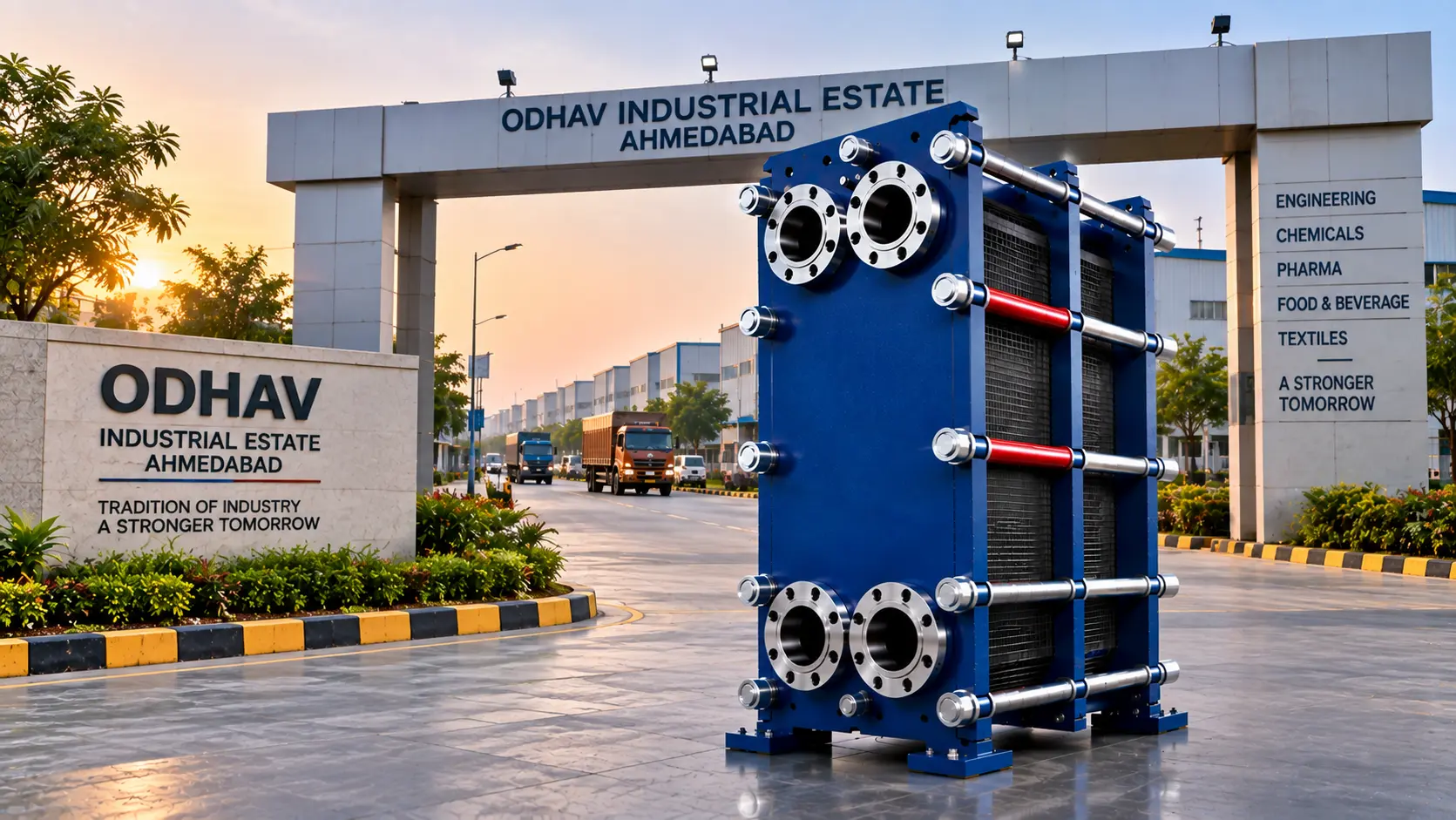
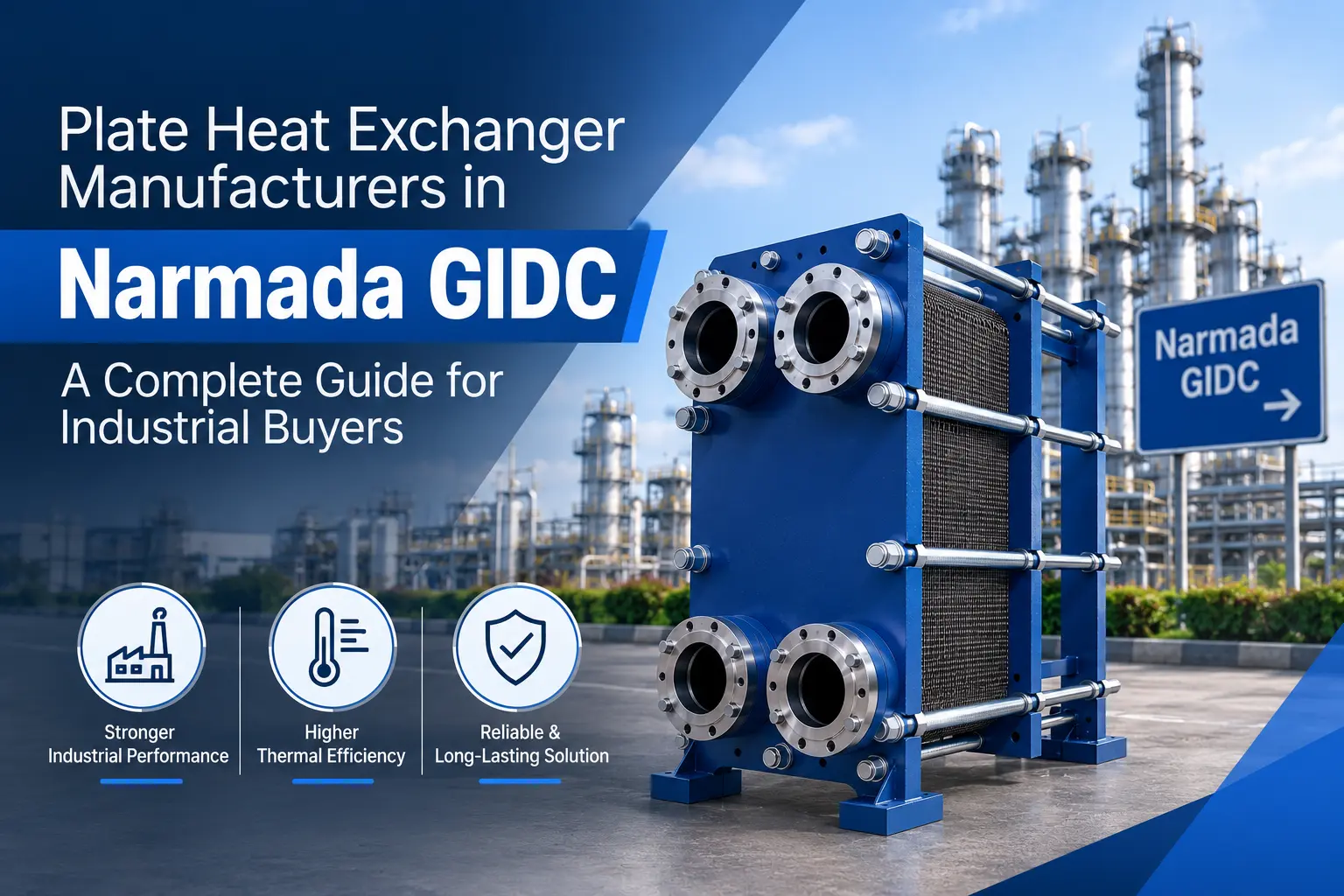
If you’re sourcing a plate heat exchanger manufacturer in Narmada GIDC, you’re likely commissioning a new utility section, replacing a corroded exchanger, or matching gasket specs for equipment already installed. Narmada GIDC, near Rajpipla in southern Gujarat, has grown into a mixed belt of chemical processing, pharma intermediates, food/agro units, and general engineering — all depending on efficient, leak-free heat transfer somewhere in the line.
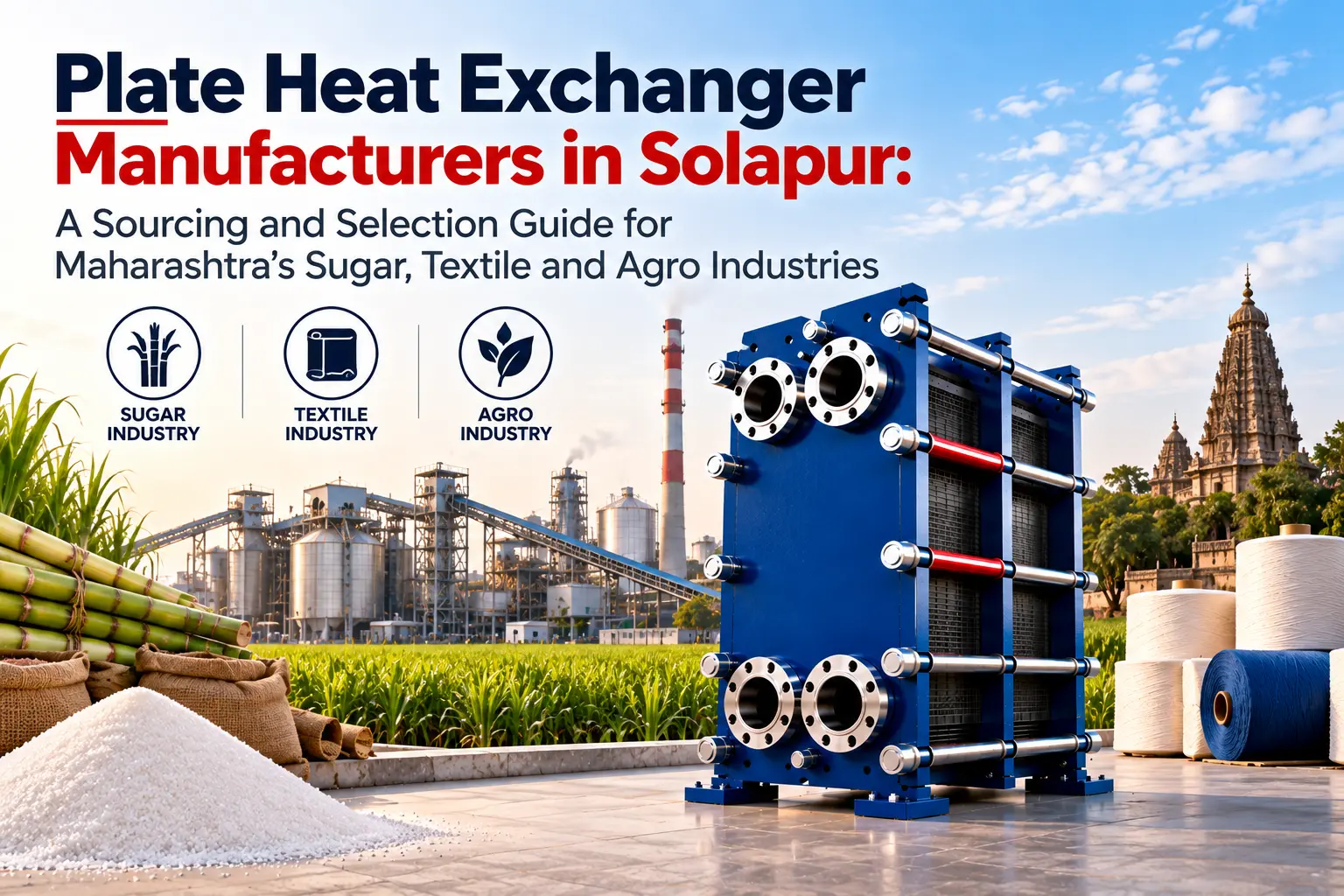
What is a plate heat exchanger? A compact device made of thin corrugated metal plates stacked together and separated by gaskets, with hot and cold fluids flowing through alternating channels. The corrugation creates turbulence that improves heat transfer versus older shell-and-tube designs — why most modern Gujarat plants now use gasketed PHEs for cooling, pasteurization, condensing, and CIP circuits.
Why Narmada GIDC’s Industrial Mix Demands a Different Approach
Chemical intermediates, specialty pharma, agro-processing, and general fabrication units sit side by side here. A PHE built for mild cooling-water duty fails quickly on a corrosive stream, and a food-grade unit needs elastomers a standard chemical-duty plate won’t have. Getting the material wrong means unplanned shutdowns, gasket blowouts, and cross-contamination between circuits.
Selection Factors That Actually Matter
- Plate material: SS304 suits general water-to-water cooling. Where chlorides, acids, or aggressive cleaning chemicals are present — common in pharma and specialty chemical duties — SS316 or SS316L is the safer baseline; titanium for more corrosive service.
- Gasket compound: This is the most under-discussed factor in PHE performance, and it’s why PHE gasket manufacturers in Sagbara see frequent repeat maintenance calls. NBR suits general water/mild oil duties economically but degrades in steam or high heat. EPDM handles steam and hot water well but resists mineral oils poorly. Viton suits aggressive chemicals and higher temperatures at a cost premium. The wrong compound is the top reason gaskets get replaced every few months instead of every few years.
- Sizing: Share your actual flow rate range — not just the average — plus max design temperature and pressure, so plate count and gasket rating are sized correctly the first time. Under-sizing to save cost causes faster fouling and reduced efficiency within a year.
- Documentation: Ask for material test certificates and pressure testing reports. Reputable manufacturers work within ISO 9001 quality frameworks and reference thermal design guidelines from bodies like ASHRAE, giving you a documented basis for acceptance rather than a verbal assurance.
Sourcing for Rajpipla’s Growing Industrial Base
Rajpipla, the district headquarters, has seen steady growth in agro-processing, dairy-linked cooperatives, and small-to-mid chemical fabrication. For plate heat exchanger manufacturers serving Rajpipla, the real differentiator isn’t engineering complexity — most duties are conventional cooling, heating, or pasteurization — it’s responsiveness. A manufacturer stocking common plate sizes and gasket profiles, able to dispatch spares within days, delivers more value than a marginally lower quote.
Serving Remote Units in Dediyapada
Dediyapada sits further from the main industrial corridor; units here — agro-processing, timber-linked, small chemical operations — face distance from service centres. For plate heat exchanger suppliers working with Dediyapada-based clients, the decision leans on documentation quality, remote troubleshooting support, and whether spares can ship without a site visit for every minor issue. Ask upfront: clear torque-sequence documentation, and can plates be reordered by serial number without shipping the exchanger back?
PHE Gasket Manufacturers in Sagbara: Getting the Elastomer Right
Sagbara’s industrial base includes units where gasket replacement is a recurring maintenance item, not a one-time purchase — which is why an experienced PHE gasket manufacturer, rather than a generic rubber parts supplier, makes a measurable difference. Genuine PHE gaskets are compression-moulded to match the exact plate corrugation profile; a mismatched gasket causes micro-leaks that stay hidden until a full teardown. Before reordering, confirm the plate model/generation, the elastomer your process actually needs now, and whether you need clip-on or glued gaskets.
Maintenance and Troubleshooting
Inspect visually every 3–6 months and fully open the unit for cleaning and gasket checks every 12–18 months (more often for high-fouling duties like dairy). A gradually rising pressure drop at the same flow rate almost always signals fouling before a mechanical problem shows up. Uneven bolt torque during reassembly causes early gasket failure more often than material fatigue does. External leaks are almost always a gasket or tightening issue, not plate failure. Dropping efficiency usually traces to fouling — a timely CIP cycle is far cheaper than a full teardown clean.
What Influences Pricing
Cost isn’t just “price per plate.” Expect plate material, gasket compound, heat transfer area, frame and connection size, and — for Rajpipla, Dediyapada, or Sagbara specifically — freight and last-mile logistics to show up as separate line items. A transparent manufacturer breaks these out clearly instead of bundling everything into one number.
Why Buyers Choose Established Manufacturers Like SRJ Heatt Exchangers
Sourcing decisions here come down to trust built over repeated, reliable delivery — not a single transaction. SRJ Heatt Exchangers India Pvt. Ltd. has built its manufacturing experience around matching plate material and gasket compound to actual process chemistry, and stocking common configurations so units in smaller pockets like Rajpipla, Dediyapada, and Sagbara aren’t left waiting weeks for a straightforward part.
Conclusion
Choosing among plate heat exchanger manufacturers in Narmada GIDC decides how many unplanned shutdowns your plant sees over the next five years. The right partner asks about your fluid chemistry before quoting material, stocks the gaskets your process actually needs, and supports you whether your unit sits in the main GIDC estate or further out in Dediyapada or Sagbara.
References
- ISO 9001 Quality Management — International Organization for Standardization
- ASHRAE — thermal systems and heat transfer engineering guidelines
- Bureau of Indian Standards (BIS) — Indian material and pressure equipment standards
- Gujarat Industrial Development Corporation (GIDC) — official industrial estate information for Narmada and other Gujarat zones
FAQs
What is a plate heat exchanger used for? Transferring heat between two fluids — cooling, heating, pasteurization, condensing — without them mixing.
SS304 or SS316? SS304 for general water duties; SS316/SS316L where chlorides, acids, or aggressive cleaning chemicals are present.
Which gasket — NBR, EPDM, or Viton? NBR for general/mild oil duty, EPDM for steam and hot water, Viton for aggressive chemicals or higher heat.
How often should gaskets be replaced? A correctly matched gasket typically lasts 3–5 years; a mismatched compound can fail within months.
Can spares reach Dediyapada or Sagbara quickly? Yes, if the manufacturer stocks common plate and gasket sizes — dispatch within days without shipping the full unit back.
What causes leaks? Mostly uneven bolt torque or poor gasket seating, rarely plate failure.
PHE vs shell-and-tube? PHEs win on footprint and efficiency for most duties; shell-and-tube suits very high-pressure or high-temperature service.