

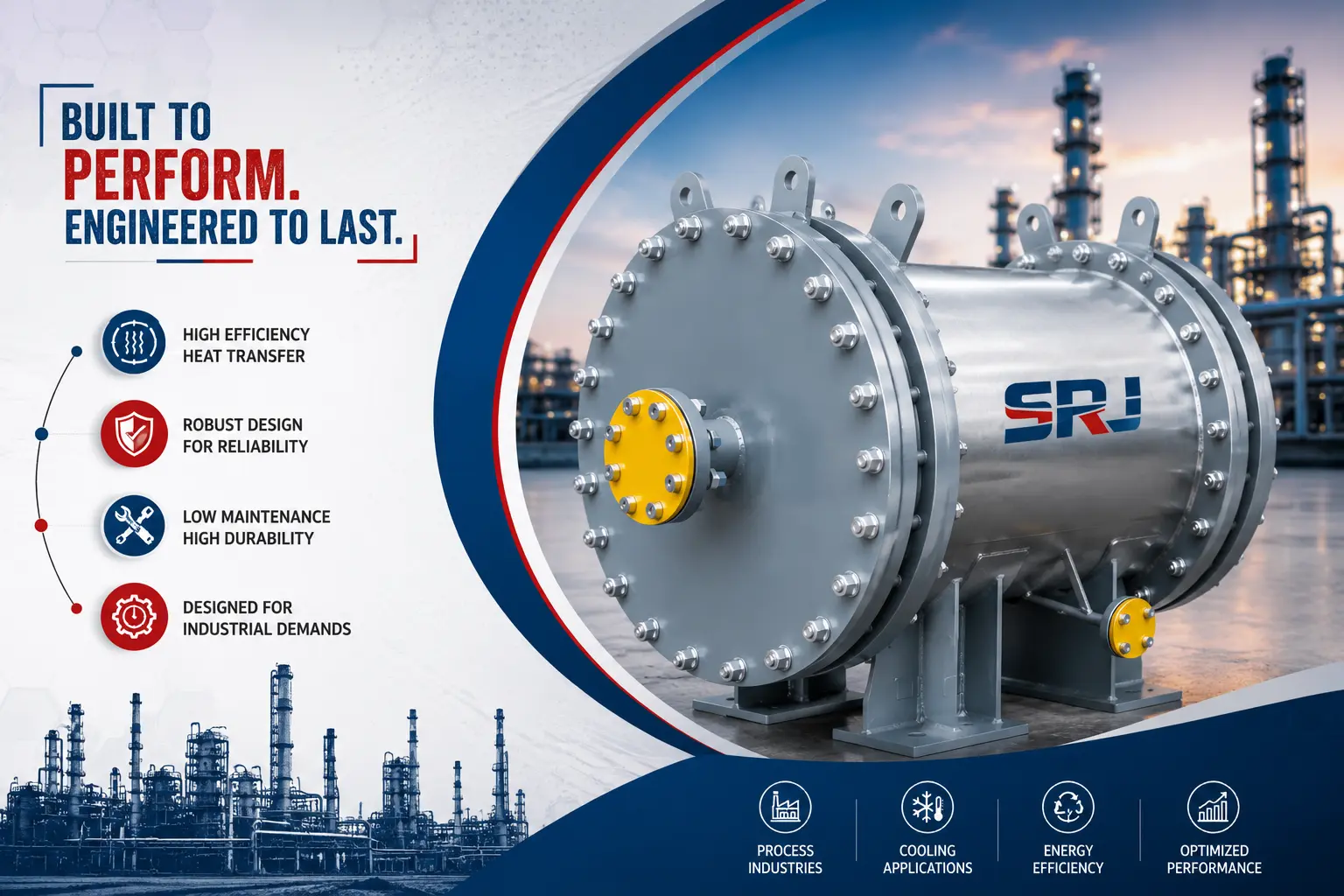
Spiral plate heat exchanger systems are widely used for industrial cooling, wastewater treatment, heat recovery and process temperature control applications across manufacturing industries. Industrial manufacturing sectors require thermal systems capable of handling continuous production operations, difficult process fluids, fluctuating temperatures, and demanding operating conditions. Industries across chemical processing, wastewater treatment, petrochemical manufacturing, food processing, pharmaceuticals, marine industries, and power generation increasingly depend on spiral plate heat exchanger systems for reliable and efficient thermal performance.
A spiral plate heat exchanger is widely used in industrial applications where compact design, efficient heat transfer, reduced fouling, and operational reliability are important for continuous industrial productivity. Modern industries prefer spiral heat exchanger systems because they help improve energy efficiency, reduce maintenance frequency, and maintain stable process temperatures under challenging industrial environments.
SRJ Heatt Exchangers India Pvt Ltd supports industrial sectors with advanced thermal solutions designed for process stability, operational efficiency, and long-term industrial reliability.
What is a Spiral Plate Heat Exchanger
A spiral plate heat exchanger is an industrial heat transfer system constructed using two metal plates rolled into a spiral configuration. These plates create two separate flow channels where process fluids move in opposite directions for efficient thermal transfer.
The spiral flow arrangement helps improve:
- thermal efficiency
- process heat recovery
- operational continuity
- compact installation
- reduced fouling accumulation
A spiral plate heat exchanger is commonly selected for industrial applications involving contaminated liquids, viscous fluids, sludge processing, slurry media, and high-fouling operating conditions.
Industries requiring efficient heat transfer with low maintenance operation increasingly prefer spiral heat exchanger systems for long-term industrial applications.
Spiral Plate Heat Exchanger Working Principle
The spiral plate heat exchanger working principle is based on counter-current flow heat transfer between two fluids moving through separate spiral channels.
In the spiral plate heat exchanger working principle:
- one fluid enters through one spiral passage
- the second fluid flows through the opposite spiral channel
- thermal energy transfers efficiently through the metal surface separating both fluids
This counter-flow arrangement improves heat recovery efficiency and helps maintain stable process temperatures.
The spiral plate heat exchanger working principle provides several operational advantages:
- improved heat transfer efficiency
- reduced operational heat loss
- stable temperature control
- lower energy consumption
- minimized fouling risk
Because of the continuous curved flow path, the spiral plate heat exchanger working principle also creates turbulence inside the channels, reducing dirt accumulation and improving self-cleaning characteristics.
Spiral Plate Heat Exchanger Diagram and Flow Arrangement
A spiral plate heat exchanger diagram generally shows:
- two spiral flow channels
- inlet and outlet nozzles
- welded plate construction
- counter-flow fluid movement
- heat transfer surfaces
The spiral plate heat exchanger diagram helps industries understand how compact spiral flow channels improve heat transfer performance while reducing blockage and pressure drop issues.
In industrial operations, the spiral plate heat exchanger diagram is useful for:
- process planning
- maintenance understanding
- utility integration
- operational flow analysis
The spiral heat exchanger design allows efficient thermal transfer while maintaining compact installation space inside industrial plants.
Spiral Heat Exchanger for Industrial Manufacturing Applications
A spiral heat exchanger is widely used across industries requiring reliable thermal systems for difficult process conditions.
Industries commonly using spiral heat exchanger systems include:
- chemical manufacturing
- petrochemical processing
- food production
- wastewater treatment
- pharmaceutical industries
- marine applications
- power generation plants
A spiral heat exchanger performs efficiently in applications involving:
- slurry fluids
- contaminated liquids
- viscous process media
- fibrous materials
- high-fouling conditions
The single-channel flow design of a spiral heat exchanger helps reduce blockage risk and supports stable industrial operation.
Spiral Plate Heat Exchanger Applications Across Industries
Spiral plate heat exchanger applications continue to increase because industries require compact and efficient thermal systems for continuous operations.
Common spiral plate heat exchanger applications include:
| Industry | Spiral Plate Heat Exchanger Applications |
| Chemical Industries | Process heating and cooling |
| Wastewater Treatment | Sludge heat recovery |
| Food Processing | Product temperature control |
| Petrochemical Plants | Industrial fluid heat transfer |
| Power Plants | Utility cooling systems |
| Marine Industries | Process cooling applications |
| Pharmaceutical Manufacturing | Temperature management |
Industries requiring reliable thermal performance under demanding process conditions commonly prefer spiral plate heat exchanger applications because of operational efficiency and reduced maintenance requirements.
Spiral Heat Exchanger Advantages and Disadvantages
Understanding spiral heat exchanger advantages and disadvantages helps industries select suitable thermal systems according to operational requirements.
Spiral Heat Exchanger Advantages
High Thermal Efficiency
The counter-current flow arrangement improves heat recovery and thermal transfer performance.
Reduced Fouling
The spiral flow path reduces dirt accumulation and supports self-cleaning operation.
Compact Design
A spiral plate heat exchanger requires less installation space compared to many traditional industrial systems.
Easy Maintenance
The single-channel construction allows easier cleaning and maintenance access.
Efficient for Difficult Fluids
A spiral heat exchanger performs effectively with viscous fluids, sludge, slurry, and contaminated liquids.
Spiral Heat Exchanger Disadvantages
Higher Initial Investment
Certain industrial applications may require customized thermal system configurations.
Specialized Design Requirements
Specific process applications may need tailored spiral plate heat exchanger construction according to operating conditions.
Limited Multi-Stream Usage
A spiral heat exchanger is generally designed for two-fluid heat transfer applications.
Even while considering spiral heat exchanger advantages and disadvantages, industries continue to prefer these systems because of reliable operational performance and low maintenance operation.
Spiral Plate Heat Exchanger for Chemical and Petrochemical Industries
Chemical and petrochemical industries require thermal systems capable of operating under:
- corrosive process conditions
- continuous production cycles
- fluctuating thermal loads
- aggressive industrial environments
A spiral plate heat exchanger helps industries improve:
- process stability
- heat recovery efficiency
- operational continuity
- energy optimization
Industrial plants handling aggressive process media commonly select spiral heat exchanger systems because of their reliable performance and durable construction.
Spiral Plate Heat Exchanger for Wastewater Treatment Applications
Wastewater treatment industries widely use spiral plate heat exchanger systems for:
- sludge heating
- wastewater heat recovery
- industrial effluent processing
- contaminated fluid temperature control
Traditional thermal systems often experience blockage problems in sludge applications. However, the spiral flow design of a spiral heat exchanger helps maintain continuous flow movement and reduces fouling accumulation.
This improves operational stability and reduces maintenance frequency in wastewater treatment operations.
Spiral Heat Exchanger Manufacturers in India
The demand for spiral heat exchanger manufacturers in India continues to increase due to rapid industrial growth and energy-efficient manufacturing requirements.
Industries searching for spiral heat exchanger manufacturers in India generally focus on:
- operational reliability
- process compatibility
- thermal efficiency
- industrial durability
- maintenance support
Reliable spiral heat exchanger manufacturers in India support industries with thermal systems designed according to actual industrial operating conditions and process requirements.
SRJ Heatt Exchangers India Pvt Ltd supports industries with dependable thermal solutions for industrial cooling, process heat transfer, utility systems, and manufacturing applications.
Why Industries Prefer Spiral Plate Heat Exchanger Systems
Modern industrial facilities increasingly prefer spiral plate heat exchanger systems because they help improve:
- process efficiency
- industrial productivity
- operational stability
- cooling consistency
- maintenance efficiency
- energy optimization
The compact and efficient construction of a spiral plate heat exchanger makes it suitable for industries requiring dependable thermal performance under continuous operating conditions.
Conclusion
A spiral plate heat exchanger is an efficient industrial thermal solution designed for demanding process environments, difficult industrial fluids, and continuous manufacturing operations. Industries across chemical processing, wastewater treatment, petrochemical manufacturing, food production, and utility sectors continue to rely on spiral heat exchanger systems for stable thermal performance and efficient heat recovery.
The increasing demand for spiral heat exchanger manufacturers in India highlights the growing importance of energy-efficient thermal systems in modern industrial operations. With compact design, reduced fouling, reliable heat transfer, and operational durability, spiral plate heat exchanger systems remain an important solution for industrial heat transfer applications.