
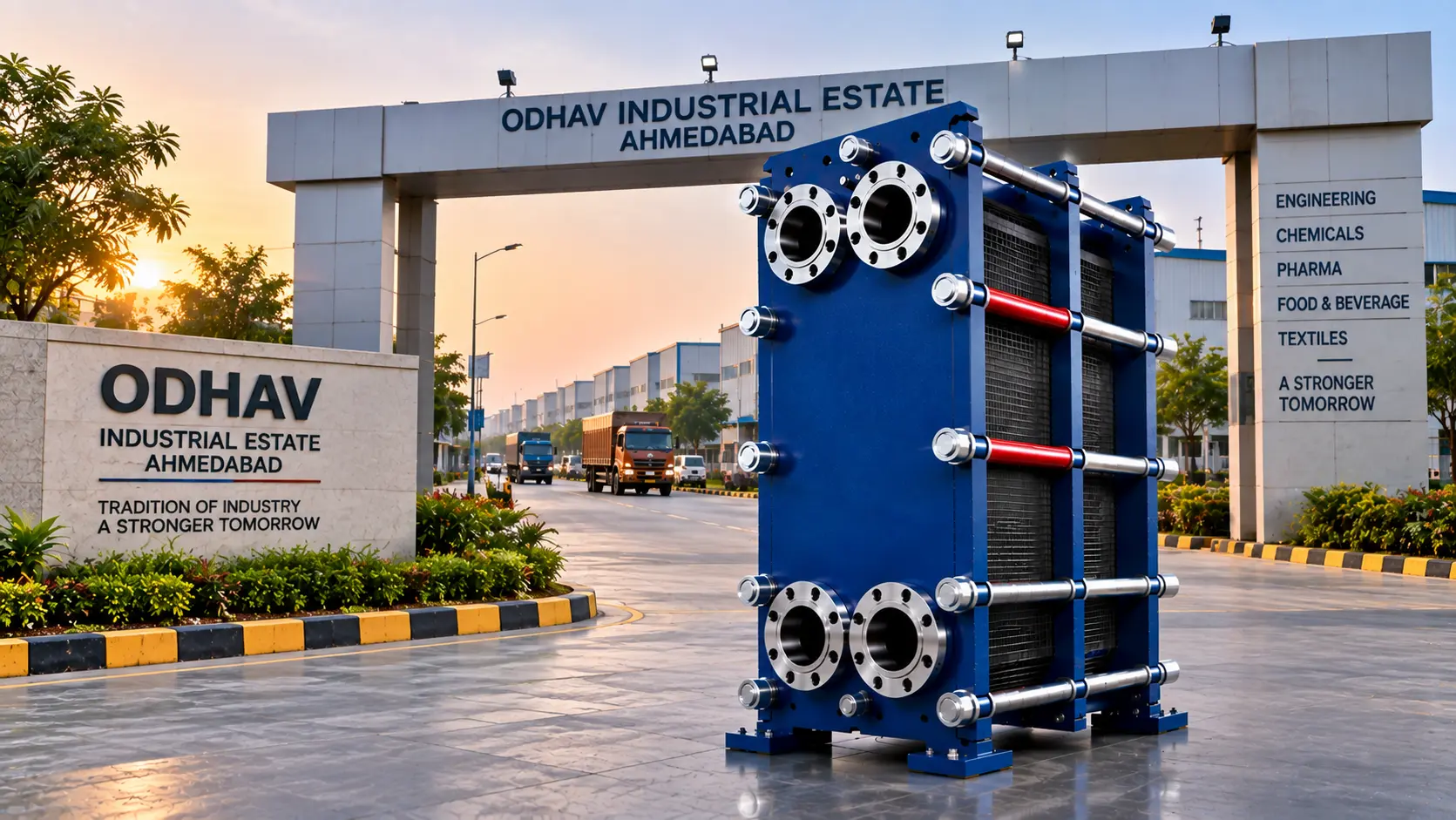
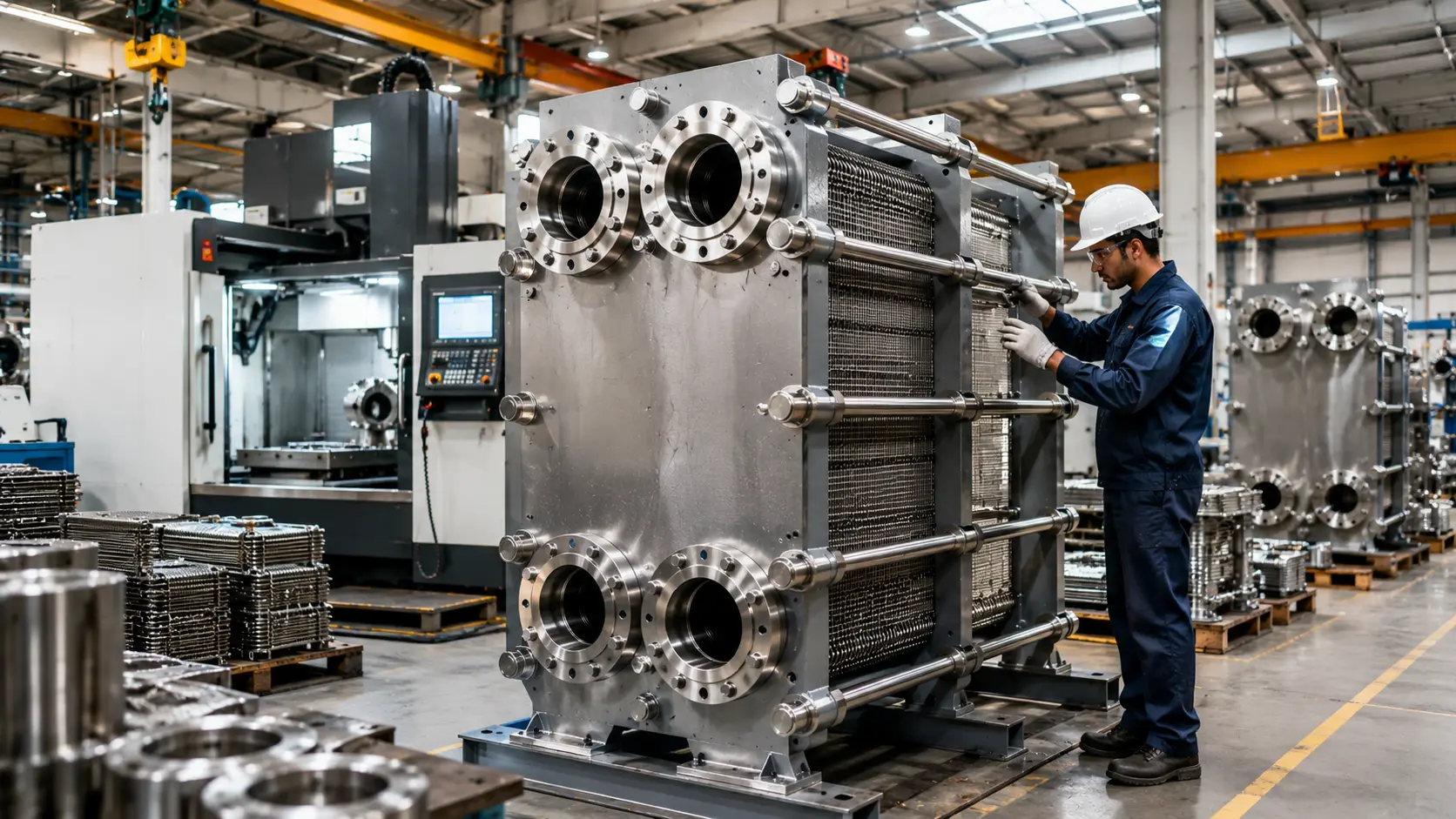
Plate heat exchanger manufacturers in the Bhavnagar–Jamnagar belt give industrial buyers access to two of Saurashtra’s strongest engineering ecosystems in one sourcing corridor. Knowing how these clusters — and their plate and gasket specialists — complement each other is the fastest way to buy the right unit at the right price.
When industrial buyers across Saurashtra compare plate heat exchanger manufacturers in Bhavnagar, the conversation almost always widens to include Jamnagar district. The two regions form a connected engineering corridor — Bhavnagar brings marine-grade metal and fabrication depth, while Jamnagar contributes one of India’s densest metalworking ecosystems. If you’re sourcing a PHE system, replacement plates, or gaskets in this belt, understanding how these clusters complement each other saves both money and downtime.
This guide walks through the Jamnagar-side zones and explains how to evaluate a supplier.
Why the Jamnagar Cluster Matters for PHE Sourcing
Jamnagar is globally known as the “Brass City of India,” home to roughly 5,000 to 8,000 metalworking units. A region that has spent seven decades perfecting casting, extrusion, CNC machining, and surface finishing develops a workforce and supply chain that transfers directly to PHE work — frame machining, plate forming, port flange fabrication, and gasket moulding draw on the same disciplines. Proximity to Mundra and Kandla ports adds export logistics few inland clusters can match.
A manufacturer like SRJ Heatt Exchangers India Pvt. Ltd. fits this profile. A specialist in plate heat exchanger systems serving Indian and Middle East markets, SRJ represents the focused, application-driven supplier that Saurashtra buyers increasingly seek — combining manufacturing discipline with genuine process-engineering knowledge rather than acting as a pure trading intermediary.
Plate Heat Exchanger Manufacturers in Jamnagar GIDC — The Engineering Core
Jamnagar GIDC, spread across multiple phases including the well-known Phase III at Dared, is the organised industrial heart of the district. For plate heat exchanger manufacturers in Jamnagar GIDC, this concentration delivers practical advantages scattered industrial pockets can’t.
The first is supply chain density. Within one estate, a PHE assembler sources pressed plates, machined frames, tie bolts, and gaskets without inter-city freight — compressing lead times and tightening quality control. The second is technical capability: many Jamnagar GIDC units run CNC and VMC machining, extrusion presses, and plating lines, which means precise plate ports and accurate frame tolerances.
Manufacturer or Reseller? How to Tell the Difference
The Jamnagar market mixes genuine fabricators with trading firms. A few checks cut through quickly: ask whether plate pressing is in-house or outsourced, confirm there’s a pressure-testing rig on site (every PHE should be hydrostatically tested before dispatch), and request recent test certificates with dates and pressures rather than catalogue specifications. A manufacturer confident in its process walks you through the shop floor without hesitation.
Plate Heat Exchanger Suppliers in Kalavad GIDC — Serving Agro and Process Industries
Kalavad, a taluka northeast of Jamnagar city, has a smaller but useful industrial footprint. Plate heat exchanger suppliers in Kalavad GIDC typically serve surrounding agro-processing and small chemical units — groundnut oil mills, dairy collection centres, and food processing operations common to this part of Saurashtra. The demand leans toward moderate-capacity units for pasteurisation, oil cooling, and water heating. Because the local base is compact, many Kalavad suppliers work as assembly-and-service partners — sourcing plates and frames from Jamnagar or Rajkot, then handling sizing, installation, commissioning, and maintenance locally.
For an end user, this matters. When a PHE in a working dairy or oil mill springs a gasket leak, a service partner 30 minutes away who responds the same day is worth more than a distant manufacturer with a lower sticker price — so weigh after-sales responsiveness as heavily as unit cost.
PHE Gasket Manufacturers in Lalpur GIDC — Where Sealing Quality Is Decided
Gaskets decide whether a plate heat exchanger runs reliably or becomes a recurring headache. PHE gasket manufacturers in Lalpur GIDC tap into the broader Jamnagar district tradition of precision polymer and metal work, producing the elastomer seals that make gasketed PHEs serviceable.
How to Judge a Gasket Supplier
Elastomer selection. NBR (nitrile) suits most water and oil duties below 130°C. EPDM handles steam, hot water, and mild chemicals up to around 160°C. Viton (FKM) covers aggressive chemicals at a cost premium. A capable supplier asks about your process fluid, temperature, and cleaning chemicals before recommending a compound — a generic answer is a warning sign.
Mould accuracy. The gasket groove must match the plate profile within tight tolerance. Even half a millimetre of deviation produces uneven compression and leaks under pressure.
Cure control. Under-cured gaskets relax and lose sealing force within months; over-cured gaskets crack during assembly. Consistent vulcanisation needs temperature-controlled presses with batch records.
A serious gasket manufacturer also provides material traceability — test certificates for the raw compound and batch records tying each lot to its moulding parameters. For buyers under FSSAI, BIS, or ISO 22000 frameworks, that documentation isn’t optional.
Matching the Right PHE to Your Process
Not every plate heat exchanger fits every job, and choosing wrong wastes capital.
Gasketed PHEs dominate applications needing regular cleaning — dairy, beverages, HVAC. Plates add or remove to change capacity, and the unit opens fully for cleaning. Brazed PHEs serve refrigeration and oil cooling as compact sealed units with no gaskets to replace — economical, but they can’t be opened once fouling exceeds what chemical cleaning removes. Semi-welded and fully welded PHEs handle aggressive media and high pressures where gasket compatibility is a concern; higher upfront cost, but they remove the gasket as a process-side failure point.
Whichever type you need, give the manufacturer five data points before requesting a quote: process fluid, operating temperature and pressure, required thermal duty in kW, allowable pressure drop, and fouling tendency. A quote without these is guesswork.
Maintenance That Protects Your Investment
A properly maintained PHE runs reliably for 15 to 20 years, with gaskets renewed every 5 to 8 years. Track approach temperatures — when the gap between hot-side outlet and cold-side inlet widens past design values, fouling has set in, so clean on this trend rather than the calendar.
Respect the torque sequence on reassembly, since uneven bolt tightening is the leading cause of post-maintenance leaks; tighten in a cross-pattern to the specified plate-pack dimension.
Store spare gaskets flat, dark, below 40°C, away from ozone, and use them within shelf life — typically 3 to 5 years for NBR and EPDM.
Finally, inspect plates for hairline cracks at corners and ports during every gasket change; such cracks may not leak at first but fail unpredictably under pressure swings.
Making the Final Call
Sourcing across the Saurashtra corridor gives you genuine choice — but choice only helps if you evaluate it well. Confirm whether a vendor manufactures or merely trades, ask for references in your industry and actually call them, and check that gaskets and replacement plates are stocked for fast dispatch, because lifecycle support matters more than the opening price.
For buyers comparing plate heat exchanger manufacturers in Bhavnagar alongside the Jamnagar GIDC, Kalavad, and Lalpur options, the smartest approach is to treat the whole belt as one talent pool and select on capability, not postcode. Specialists such as SRJ Heatt Exchangers India Pvt. Ltd. show what that looks like when manufacturing depth meets real process-engineering expertise — and that combination, more than any single location, delivers a heat exchanger that performs for decades.
Plate Heat Exchanger Manufacturers – Frequently Asked Questions
Who are the leading plate heat exchanger manufacturers in the Bhavnagar–Jamnagar belt?
The belt combines Bhavnagar’s marine-grade fabrication with the Jamnagar GIDC, Kalavad and Lalpur clusters. Established plate heat exchanger manufacturers such as SRJ Heatt Exchangers India Pvt. Ltd. pair in-house plate pressing and testing with real process-engineering support, which matters more than location alone.
How do I tell genuine plate heat exchanger manufacturers from resellers?
Ask whether plate pressing is done in-house, confirm an on-site hydrostatic test rig, and request recent test certificates with dates and pressures. Genuine plate heat exchanger manufacturers walk you through the shop floor without hesitation.
Do plate heat exchanger manufacturers in Jamnagar GIDC supply gaskets and spare plates?
Yes. The better plate heat exchanger manufacturers stock NBR, EPDM and Viton gaskets plus replacement plates for fast dispatch, so lifecycle support — not just the opening price — should guide your choice.
What information do plate heat exchanger manufacturers need for an accurate quote?
Give them five data points: process fluid, operating temperature and pressure, thermal duty in kW, allowable pressure drop, and fouling tendency. With these, plate heat exchanger manufacturers can size the unit correctly instead of guessing.