
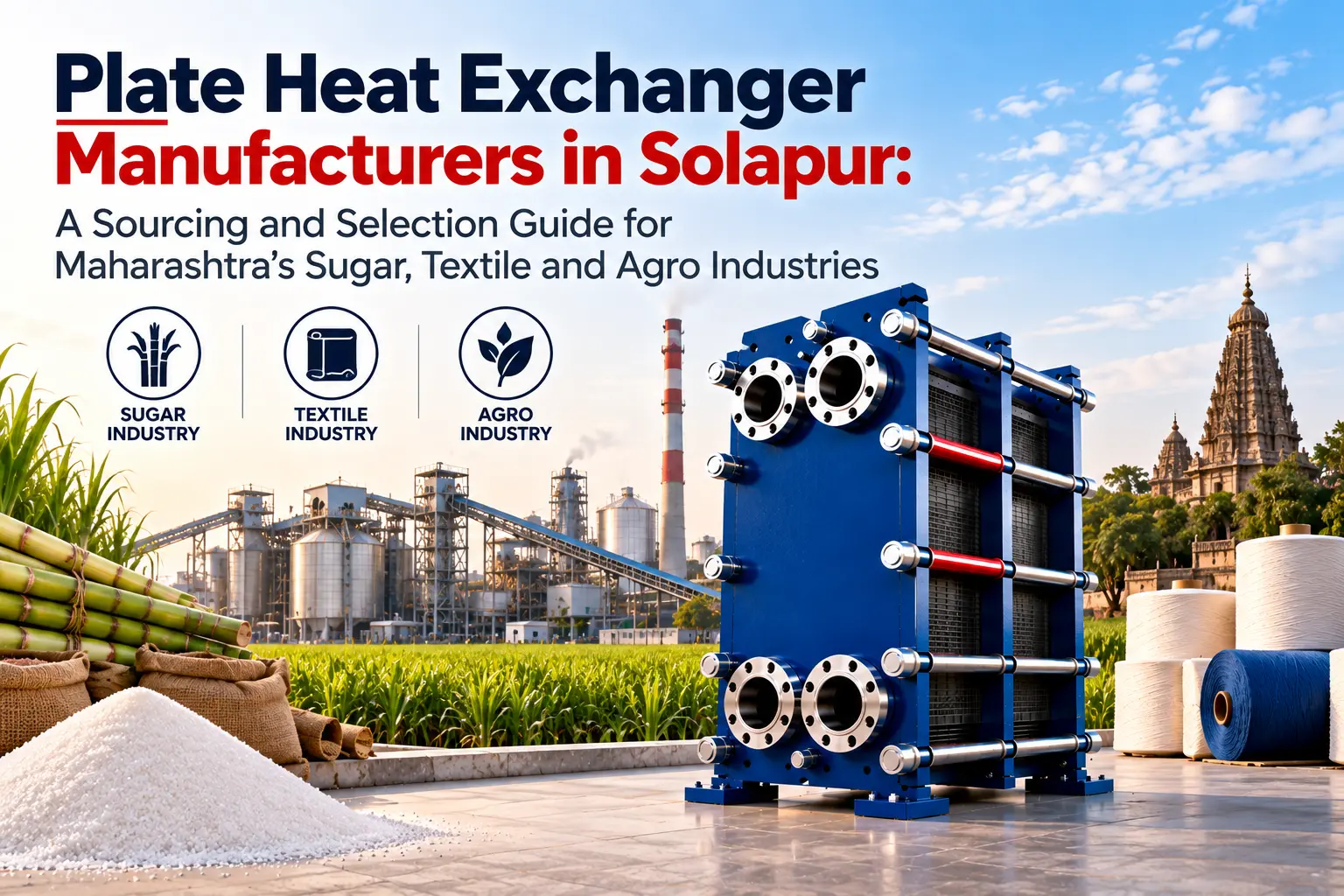
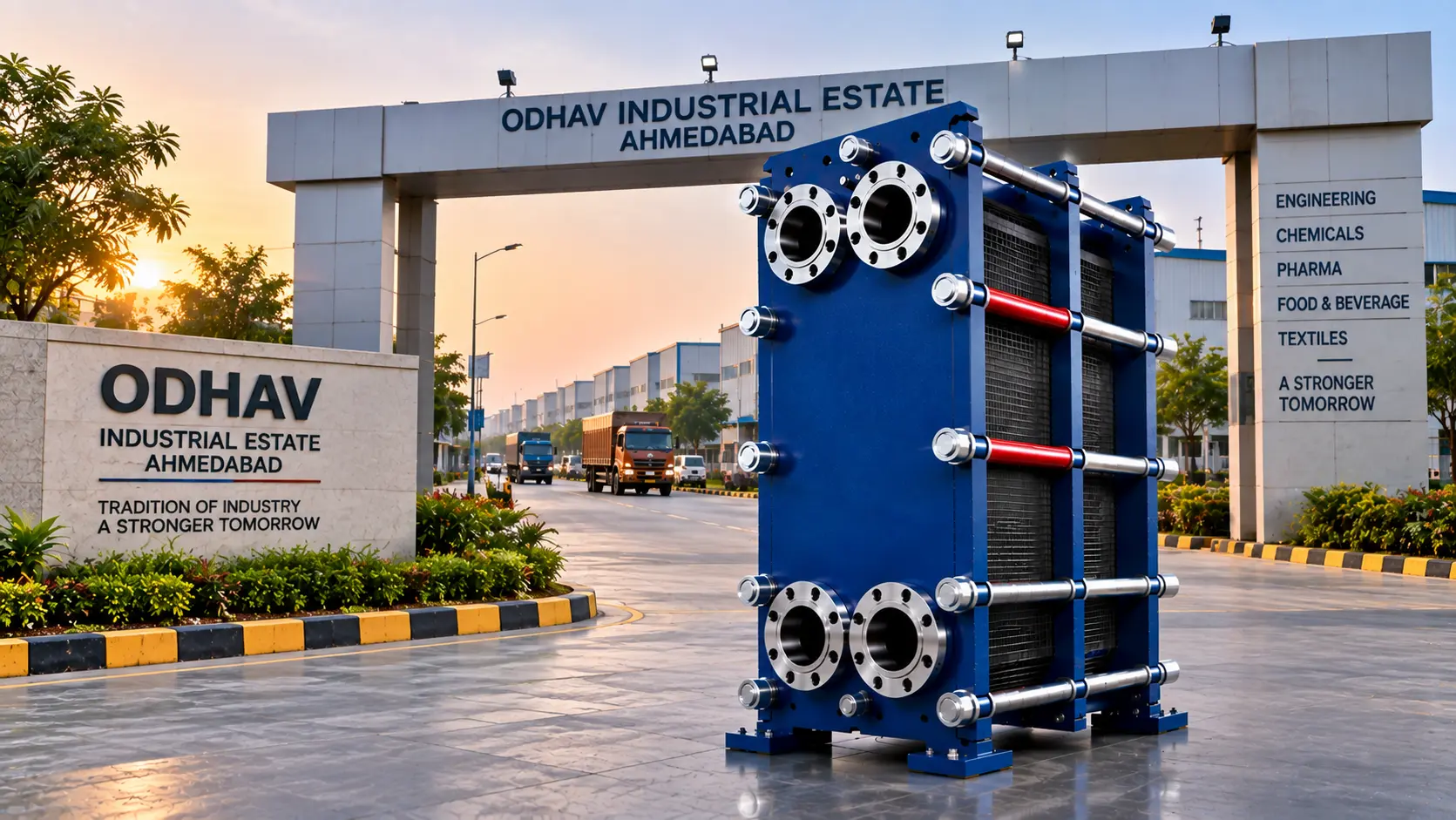

When you need reliable thermal management across HVAC systems, food processing plants, or chemical manufacturing facilities, a plate heat exchanger delivers efficiency that shell-and-tube designs simply cannot match. Unlike traditional counterparts that occupy multiple meters of space, these compact systems transfer heat between fluids through corrugated metal plates stacked together—achieving thermal duties with a footprint three to five times smaller while maintaining superior performance metrics.
The fundamental advantage lies in geometry. A plate heat exchanger creates alternating thin channels where hot and cold fluids flow in counter-current paths, maximizing surface area contact and inducing turbulent flow that dramatically improves heat transfer coefficients. Where shell-and-tube units achieve overall heat transfer coefficients (U-values) of 500–2,000 W/m²·K, plate heat exchangers consistently reach 3,000–7,000 W/m²·K. For engineering teams, this translates to purchasing 60–80% less equipment by surface area while achieving identical thermal duties.
Understanding Plate Type Heat Exchanger Designs and When to Deploy Each
Not all plate-type heat exchangers perform identically. Your application’s specific demands—fluid chemistry, operating temperature, pressure ratings, and service accessibility requirements—determine which configuration delivers optimal returns.
Gasketed Plate and Heat Exchanger Systems: The Industry Standard
Gasketed designs dominate industrial deployment because they balance performance, cost, and maintainability. Individual corrugated plates sit between elastomeric gaskets (typically EPDM, NBR, or Viton), compressed by tie bolts through aluminum or ductile iron frame plates. This arrangement permits complete disassembly for internal inspection, gasket replacement, and plate cleaning without special tools or facility downtime.
The plate-to-plate heat exchanger configuration here excels in applications with moderate temperature ranges (up to 200°C with standard stainless steel 316L) and moderate pressures (typically 10–25 bar). Food and beverage pasteurization, HVAC heating loops, dairy processing, and district heating systems rely almost exclusively on gasketed designs because regulatory standards mandate simple, inspectable construction.
A critical practical consideration: gasket material selection determines fluid compatibility and temperature ceiling. A system designed for 80°C water service using EPDM gaskets will fail catastrophically if 120°C thermal oil flows through it. At SRJ Heat Exchangers India, we’ve identified that over 25% of field failures stem from specification errors rather than equipment defects—selecting NBR gaskets for ammonia applications, for instance, causes accelerated degradation within weeks.
The real-world advantage appears during maintenance. When fouling causes pressure drop to exceed design parameters, technicians open the unit in 30 minutes, visually inspect every plate, clean with chemical solvents or mechanical brushing, and reassemble. Zero welding, zero thermal stress on components, zero risk of introducing defects during service work.
PHE Heat Exchanger Brazed Variants: Compact High-Pressure Solutions
Brazed plate heat exchanger systems eliminate gaskets entirely. Vacuum brazing with copper or nickel filler permanently bonds plates into a single rigid assembly, permitting operation at pressures exceeding 40 bar and temperatures reaching 232°C with copper braze, higher with nickel alternatives.
This configuration delivers maximum compactness—a brazed unit occupies 40% less floor space than an equivalent gasketed design. Refrigeration loops, chilled water circuits, and ammonia applications favor brazed construction. However, fixed plate counts mean you cannot modify capacity by swapping plates; every brazed assembly represents a permanent thermal duty rating.
In Middle Eastern climates where facility expansions frequently occur, this rigidity creates operational limitations. If process capacity grows 20%, you cannot add plates; you must install an entirely new unit. Gasketed alternatives, conversely, expand capacity incrementally by adding plates—a significant advantage in growth-stage operations common throughout the Gulf region.
Semi-Welded and Fully Welded Plate for Heat Exchanger: Handling Aggressive Media
When one fluid is corrosive (concentrated acids, seawater, ammonia) but the other is benign, semi-welded construction solves the chemistry problem elegantly. One side of the plate pack undergoes full welding for chemical resistance; the other side remains gasketed for serviceability. This hybrid approach handles applications where traditional designs fail within months.
Fully welded PHE heat exchangers provide maximum durability and highest pressure ratings (up to 60+ bar). Seawater desalination, geothermal energy recovery, and extreme pressure chemical processes demand welded construction. The tradeoff: internal inspection requires destructive disassembly or advanced techniques like borescope photography, and repair involves professional welding services, extending downtime significantly.
Thermal Performance and Efficiency: Moving Beyond Nameplate Specifications
Manufacturers provide peak-efficiency data under ideal laboratory conditions: precisely controlled inlet temperatures, carefully managed flow rates, and spotless plate surfaces. Real plants operate in considerably different worlds.
A plate to plate heat exchanger’s actual performance degrades predictably over operating hours due to fouling—accumulation of deposits, biological growth, or scale formation on the corrugated plate surfaces. A properly designed unit delivers rated capacity for initial operating months, then declines approximately 2–4% annually depending on fluid quality and temperature differentials.
Consider a pasteurization plant running 24/7. Initial heat transfer capacity reaches design specification at 95% efficiency. After 18 months of continuous service, that same unit—assuming no cleaning interventions—operates at 87% efficiency, requiring the facility to extend pasteurization residence time or reduce throughput. Operators often mistake this gradual decline for equipment aging rather than fouling-induced efficiency loss.
Energy consumption implications prove substantial. A 10% efficiency decline on a 500 kW heat duty represents an additional 50 kW continuously flowing to cooling systems or heating sources. Over a three-year operating cycle, that degradation costs a typical industrial facility $80,000–$150,000 in additional energy consumption before operators even recognize the problem.
Modern facilities address this through predictive maintenance protocols. Temperature and pressure sensors at inlet and outlet ports continuously monitor performance. A 15% increase in pressure drop across the plate pack (while maintaining constant flow rate) signals fouling progression. Rather than waiting for capacity loss to become obvious, maintenance teams schedule cleaning during planned shutdowns, maintaining efficiency within 2–3% of peak ratings throughout equipment life.
Practical Plate Heat Exchanger Selection: What Specification Teams Actually Need to Know
Effective selection requires more than reviewing duty specifications. Successful installations depend on seven critical evaluation dimensions that separate high-performing systems from perpetual problem children.
Thermal Load and Approach Temperature: Calculate required heat transfer using: Q = ṁ × Cp × ΔT, where Q is duty in kilowatts, ṁ is mass flow rate (kg/s), Cp is specific heat capacity (J/kg·K), and ΔT is temperature change. A facility heating 50 tons/hour of 80°C water from 20°C starting temperature requires approximately 1,850 kW. The temperature approach—difference between exiting cold fluid and entering hot fluid—determines required plate count. Tighter approaches demand more plates, increasing capital cost and pressure drop. Most applications target 5–10°C approaches as the sweet spot balancing efficiency against equipment cost.
Fluid Property Assessment: Viscosity, particulate content, and chemical corrosivity determine material selection and configuration. Viscous fluids (thermal oils, glycol solutions exceeding 500 cSt at operating temperature) generate excessive pressure drops in narrow plate channels; alternative designs become necessary. Particulate-laden fluids (certain food products, wastewater streams) foul rapidly; wider plate spacing or pilot filtering becomes mandatory. Corrosive fluids drive titanium or Hastelloy plates; stainless steel 304/316 proves inadequate, yet many engineers default to standard materials without chemical compatibility verification.
Operating Pressures and Temperature Extremes: Gasketed designs handle 10–25 bar comfortably; brazed construction extends to 40+ bar; welded systems reach 60–80 bar. Exceeding design pressure causes gasket blow-out, leaks, and cross-contamination between circuits. Temperature swings create thermal expansion differentials; mismatched material selections cause internal stresses leading to plate deformation or gasket failure. A 200°C temperature swing across a poorly specified system generates internal stresses exceeding material yield strength.
Operational Flexibility Requirements: Will this facility need to expand capacity within five years? Gasketed construction permits capacity modification through plate additions. Brazed and welded variants require new unit purchases. Growth-stage facilities should consistently specify gasketed designs despite slightly higher per-unit costs—the flexibility advantage pays dividends during scaling operations.
Maintenance Accessibility: Installing a plate heat exchanger in confined spaces without adequate clearance for frame disassembly guarantees service complications. When fouling occurs (inevitably, within 12–36 months depending on fluid quality), maintenance teams need working space to remove the complete unit, open the frame, access individual plates, and clean without facility disruption. Poor installation positioning transforms routine 4-hour maintenance into weekend emergency work.
Material Compatibility Beyond Temperature: Gasket materials deteriorate from chemical exposure. Oils degrade EPDM gaskets within months; certain solvents attack NBR compounds; aggressive alkaline solutions require Viton. Engineers frequently overlook this dimension, specifying equipment rated for process temperatures without verifying that gasket polymers survive the fluid chemistry. Field failures traced to incompatible gaskets represent 15–20% of our regional service call volume.
Total Cost of Ownership Over Equipment Life: Capital cost represents only 20–30% of lifetime expenses. Energy consumption, maintenance labor, downtime costs, and fouling-related losses dominate long-term economics. A $12,000 gasketed unit consuming $800/month in energy, requiring $400 biannual maintenance, costs $56,800 over five years. An $8,000 alternative consuming $1,200/month costs $80,000 over the same period. Purchasing decisions based solely on initial price ignore the mathematics of operational economics.
Real-World Troubleshooting: Diagnosing Performance Loss Before Failures Occur
Experienced operators recognize performance degradation through specific observable patterns. Early intervention prevents catastrophic failures and extends maintenance intervals.
Pressure Drop Escalation: Install differential pressure gauges on inlet and outlet ports during commissioning, recording baseline values. A 40% increase in pressure drop over 18 months indicates fouling progression. Chemical cleaning becomes necessary when pressure drop reaches 70% above baseline; mechanical intervention (plate removal and ultrasonic cleaning) becomes necessary when exceeding 100% increase. Facilities monitoring this parameter extend plate pack life from 3–4 years to 6–8 years through preventive maintenance timing.
Temperature Approach Degradation: Track the approach temperature—difference between the coldest outlet and hottest inlet in the plate pack. When approach temperature increases 20% from initial commissioning values, fouling has begun reducing heat transfer surface effectiveness. This metric provides early warning before actual capacity loss becomes operationally apparent, typically permitting scheduling of cleaning during planned shutdowns rather than emergency interventions during peak production periods.
Uneven Temperature Distribution: Thermographic imaging or manual probing reveals localized hot or cold spots across the frame, indicating flow distribution problems from blockages or gasket degradation. When temperature variations exceed ±5°C across similar sections of the plate pack, internal obstruction or plate warping has begun; disassembly and inspection become necessary.
Visible Corrosion or Scale on Accessible Surfaces: White mineral deposits (calcium/magnesium carbonate), orange-red deposits (iron oxide), or black biological growth visible on external surfaces indicate internal conditions are significantly worse. Scale formation progresses exponentially; 2mm of internal scale reduces heat transfer 25–30%. Address visible external conditions within weeks, not months.
Gasket Weeping or Active Leaks: Minor gasket weeping (barely visible droplets) indicates seal degradation but manageable; most systems tolerate minor weeping for 2–3 weeks. Active streams require immediate intervention—operating fluid loss accelerates fouling (less cooling flow) while contaminating adjacent circuits. Stop operations and schedule disassembly.
Regional Considerations: Plate Heat Exchanger Performance in Middle Eastern Climates
Operating conditions across the Gulf region present specific thermal management challenges that standard temperate-climate designs inadequately address.
Incoming cooling water temperatures regularly reach 40–45°C during summer months, compared to 15–20°C in European operations. This raises the cold-side temperature approach, requiring more plates to achieve identical cooling duties. A system sized for European conditions will undershoot capacity by 15–25% in Gulf climates; facilities must specify plate counts accounting for local water temperature extremes.
High mineral content in source water—particularly in desalination plants and facilities relying on recycled cooling water—accelerates fouling and scale formation. Calcium and magnesium carbonates deposit on corrugated surfaces faster than in low-mineral environments. Standard cleaning protocols prove inadequate; facilities must implement chemical treatment programs (scale inhibitors, water conditioning) alongside mechanical maintenance. Without these interventions, cleaning intervals compress from 24 months to 6–8 months.
Dust-laden environments require enhanced intake filtration on cooling systems. Particulates accumulate in cooling towers and cooling ponds, eventually traveling through circulation loops. Plate heat exchangers with 2–5mm channel spacing cannot tolerate particulate loads exceeding 100 microns; advanced filtration becomes economically essential rather than optional.
Industry Applications and Performance Validation
Food and Beverage Processing: Dairy pasteurization, juice concentration, and beer cooling represent the largest deployment category. Regulatory standards mandate sanitary gaskets and accessible construction. Gasketed configurations with smooth stainless steel plates (AISI 304) dominate these applications, with cleaning intervals every 3–6 months driven by biological fouling potential.
Chemical Manufacturing: Industrial cooling, waste heat recovery, and process heating leverage plate heat exchangers for space efficiency and high heat transfer rates. Semi-welded and welded designs handle aggressive media; brazed variants manage high-pressure reactions. Total installed capacity in chemical applications exceeds HVAC and food sectors combined globally.
District Heating and Cooling: Community heating networks and large campus cooling systems depend on plate heat exchangers for efficient connection between central plants and individual buildings. Gasketed designs dominate due to service accessibility and modular capacity expansion as districts grow.
Refrigeration and Chiller Systems: Secondary cooling loops employ brazed plate heat exchangers for compactness and high-pressure ratings. These applications often specify titanium plates in marine environments or coastal regions where corrosion potential exceeds standard stainless steel tolerance.
Geothermal and Waste Heat Recovery: Industrial facilities recovering process waste heat or geothermal energy employ plate heat exchangers because single-use applications justify custom material specifications and high pressure ratings achievable through welded designs.
Maintenance Investment and Long-Term System Reliability
A $1,000 annual preventive maintenance investment prevents $30,000–$50,000 emergency repairs and productivity losses. Established maintenance programs include:
- Monthly: Visual inspection for external corrosion, gasket condition, frame bolt tension, carrier bar lubrication
- Quarterly: Pressure and temperature monitoring with trending analysis; filter element replacement
- Biannual: Chemical cleaning (for moderate fouling) or mechanical plate access and ultrasonic cleaning
- Annual: Complete disassembly, plate-by-plate inspection, gasket replacement, and pressure test
Facilities implementing these protocols report equipment life extending to 12–15 years; those neglecting maintenance observe failures within 4–6 years. The maintenance cost differential proves negligible compared to replacement and lost productivity from unplanned shutdowns.
Cost-Benefit Analysis: When Plate Heat Exchanger Investment Delivers Superior Returns
Capital investment for a 500 kW duty plate heat exchanger system ranges from $8,000–$18,000 depending on materials and configuration. Equivalent shell-and-tube units occupy 3–5× more floor space and cost $12,000–$25,000 due to increased material requirements.
Energy efficiency advantages deliver compelling returns. A gasketed plate heat exchanger operating at 93% efficiency versus a shell-and-tube unit at 82% efficiency translates to 11% energy cost reduction. For a facility consuming 500 kW continuously, annual savings reach $40,000–$60,000 at regional electricity rates. This efficiency advantage alone recovers the additional capital cost within 4–8 months of operation.
Space savings prove equally valuable in land-constrained regions. A 500 kW plate heat exchanger footprint measures roughly 1.2m × 0.8m × 1.5m height (1.4 m³). An equivalent shell-and-tube unit requires 2.5m × 1.2m × 2m height (6+ m³). Real estate costs in Middle Eastern industrial zones range $50–$200/m² annually; space efficiency savings approach $250,000–$1,000,000 over equipment lifetime for large central plants.
Conclusion: Why Plate Heat Exchanger Systems Remain the Thermal Engineering Standard
The plate heat exchanger represents mature, validated thermal technology with demonstrable advantages across efficiency, space utilization, and operational flexibility. The corrugated plate design creates turbulent flow and high heat transfer coefficients impossible to achieve with traditional shell-and-tube construction. Whether managing district heating networks, supporting HVAC comfort systems, or handling demanding chemical process duties, these systems deliver reliable performance when properly specified, installed, and maintained.
Success demands attention to five critical dimensions: accurate thermal load calculation, precise fluid property assessment, appropriate design selection (gasketed, brazed, or welded), regional operating condition accommodation (particularly important in Middle Eastern facilities operating in extreme ambient temperatures), and commitment to preventive maintenance protocols. When these elements align, plate heat exchanger systems operate reliably for 10–15 years while consistently outperforming alternative designs in efficiency, cost per kilowatt transferred, and installation space requirements.
Selecting and deploying a plate type heat exchanger correctly requires engineering expertise and operational discipline, but the returns—measured in energy savings, space efficiency, and extended equipment life—justify the investment entirely. Whether your facility operates in India’s tropical regions or the Middle East’s desert environment, understanding these core principles ensures your thermal management systems deliver intended performance while minimizing lifecycle costs.
External References:
- U.S. Patent and Trademark Office: Fouling-Resistant Plate Heat Exchanger Designs and Industrial Standards ASHRAE (American Society of Heating, Refrigerating and Air-Conditioning Engineers): Heat Transfer and Thermal System Design Guidelines International Organization for Standardization (ISO 9001, ISO 8573): Manufacturing and Quality Standards for Heat Transfer Equipment
- Engineering Thermodynamics and Heat Transfer, Applied Principles: University-level thermal engineering fundamentals covering plate exchanger design mathematics and counter-current flow principles
About SRJ Heat Exchangers India Pvt. Ltd
SRJ Heat Exchangers India is a leading manufacturer and installer of plate heat exchanger systems serving industrial facilities across India and throughout the Middle East region. With specialized expertise in thermal engineering for hot-climate applications, desert operating conditions, and high-mineral-content water environments, SRJ designs and deploys customized solutions for food processing, chemical manufacturing, HVAC systems, and district heating installations. Visit : for India operations or for Middle East region support.