Plate Heat Exchanger: Manufacturer in India, Working Principle, Capacity, Design, Types and Price Guide

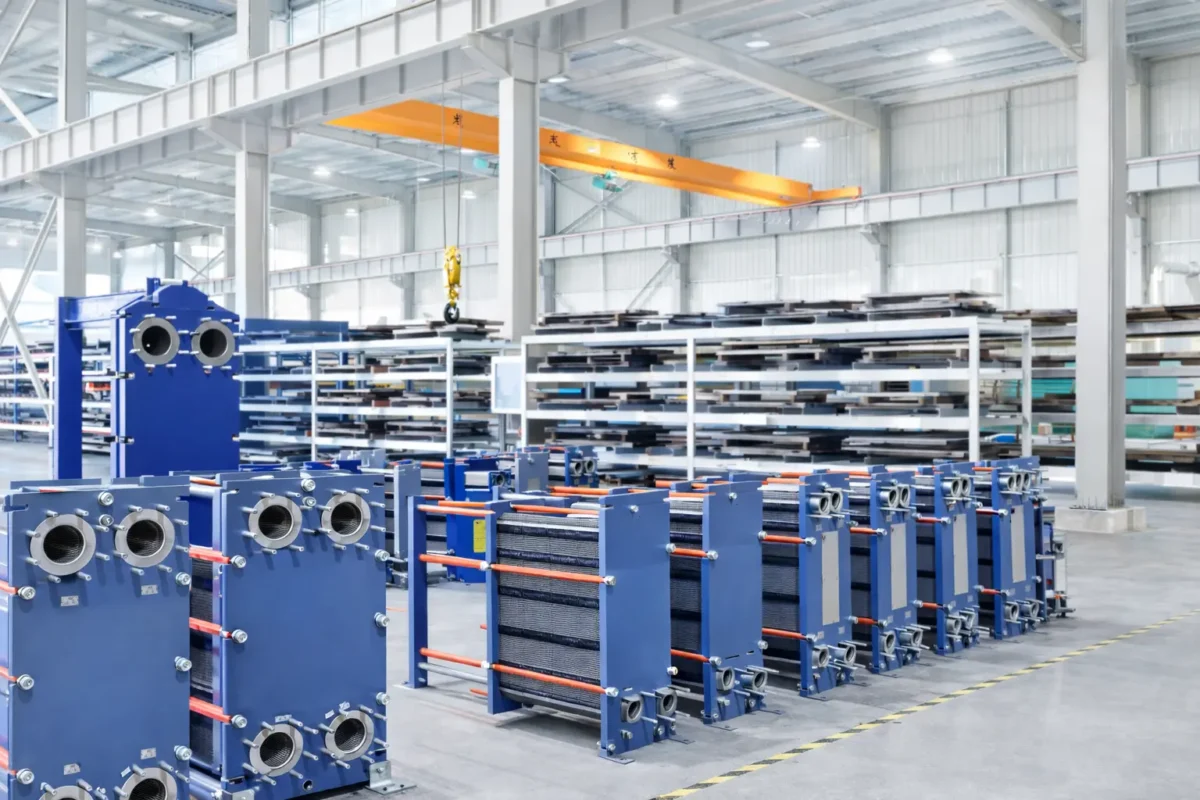
In modern industrial operations, a plate heat exchanger plays a critical role in improving thermal efficiency, reducing energy consumption, and maintaining process stability. From HVAC systems and dairy processing to pharmaceuticals, chemicals, utilities, and district cooling, the demand for a high-performance plate heat exchanger continues to grow across India and international markets.

At SRJ Heatt Exchangers India Pvt Ltd, we provide reliable industrial thermal solutions engineered for high efficiency, long service life, and application-specific performance. As a trusted Plate Heat Exchanger manufacturer in India, our focus is on precision engineering, durable materials, and dependable support for industrial buyers looking for performance-driven solutions.

This guide covers the complete commercial and technical intent behind plate heat exchanger search queries, including plate heat exchanger capacity, plate heat exchanger working principle, plate heat exchanger design, plate heat exchanger types, and Plate Heat Exchanger Price considerations.

Plate Heat Exchanger Manufacturer in India

Choosing the right Plate Heat Exchanger manufacturer in India is one of the most important decisions for any industrial plant, facility manager, EPC contractor, or procurement team.

A reliable manufacturer should offer:

  • application-specific engineering
  • industrial-grade materials
  • scalable capacity options
  • fast spare support
  • technical consultation
  • long-term service reliability

At SRJ Heatt Exchangers India Pvt Ltd, every plate heat exchanger is designed according to actual process parameters such as:

  • flow rate
  • inlet and outlet temperature
  • pressure requirement
  • fluid compatibility
  • thermal duty
  • future expansion needs

This ensures that the selected plate heat exchanger delivers consistent performance under real industrial operating conditions.

Plate Heat Exchanger Working Principle

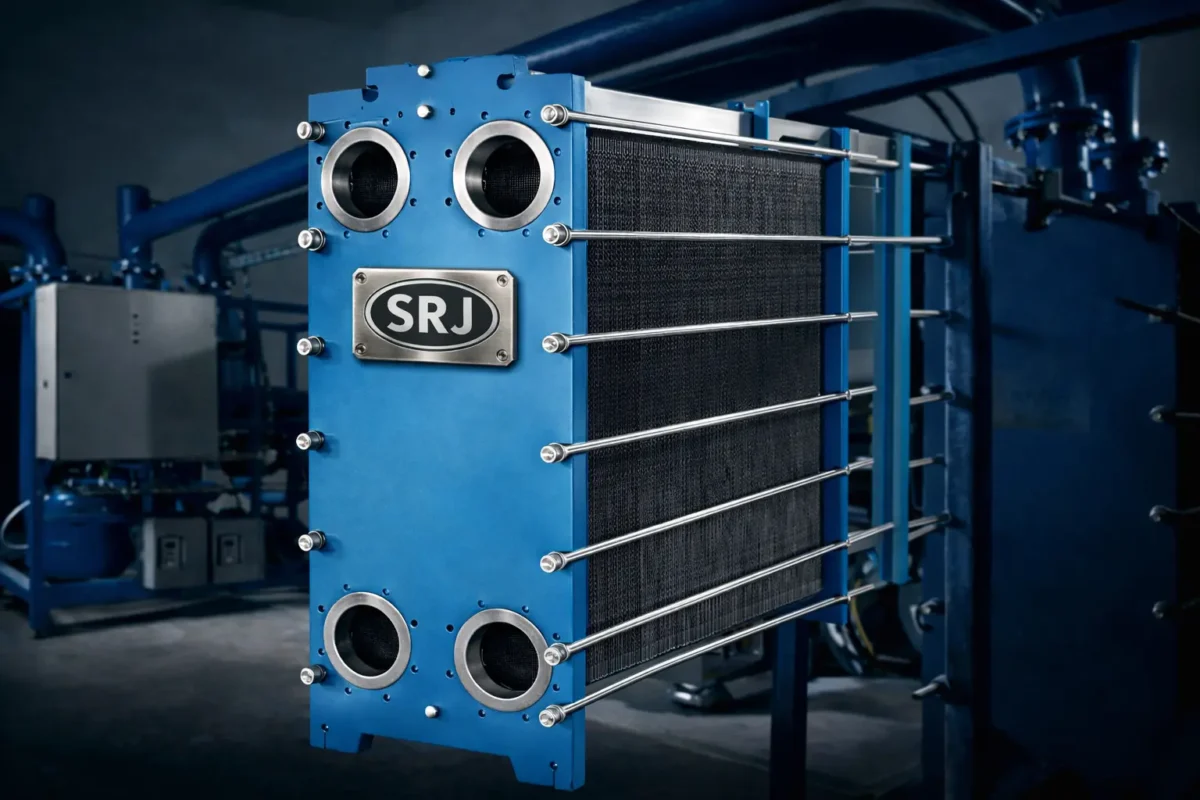
The plate heat exchanger working principle is based on transferring heat between two fluids through thin corrugated plates arranged in a compact frame.

Hot and cold fluids flow in alternate channels created by the plates. The metal surface allows heat transfer from one fluid to the other without mixing them.

This plate heat exchanger working principle offers multiple advantages:

  • faster thermal transfer
  • compact footprint
  • lower energy loss
  • easy maintenance
  • modular expansion

The corrugation pattern on each plate creates turbulence, which improves the heat transfer coefficient and increases overall efficiency.

For industries searching for plate heat exchanger working principle, the key concept is maximum heat transfer surface area in minimum space.

Plate Heat Exchanger Design

A proper plate heat exchanger design directly impacts operational performance and long-term reliability.

Key design parameters include:

Thermal Load

The required heating or cooling duty in kW or kcal/hr.

Flow Rate

Fluid flow per hour for both hot and cold streams.

Temperature Range

Inlet and outlet temperature requirements.

Pressure Drop

Permissible pressure loss across the system.

Material Selection

Common materials include:

  • stainless steel
  • titanium
  • special alloys

A professionally engineered plate heat exchanger design ensures:

  • high efficiency
  • low fouling
  • reduced downtime
  • long service life

At SRJ, every plate heat exchanger design is aligned with the client’s process requirement and commercial objective.

Plate Heat Exchanger Types

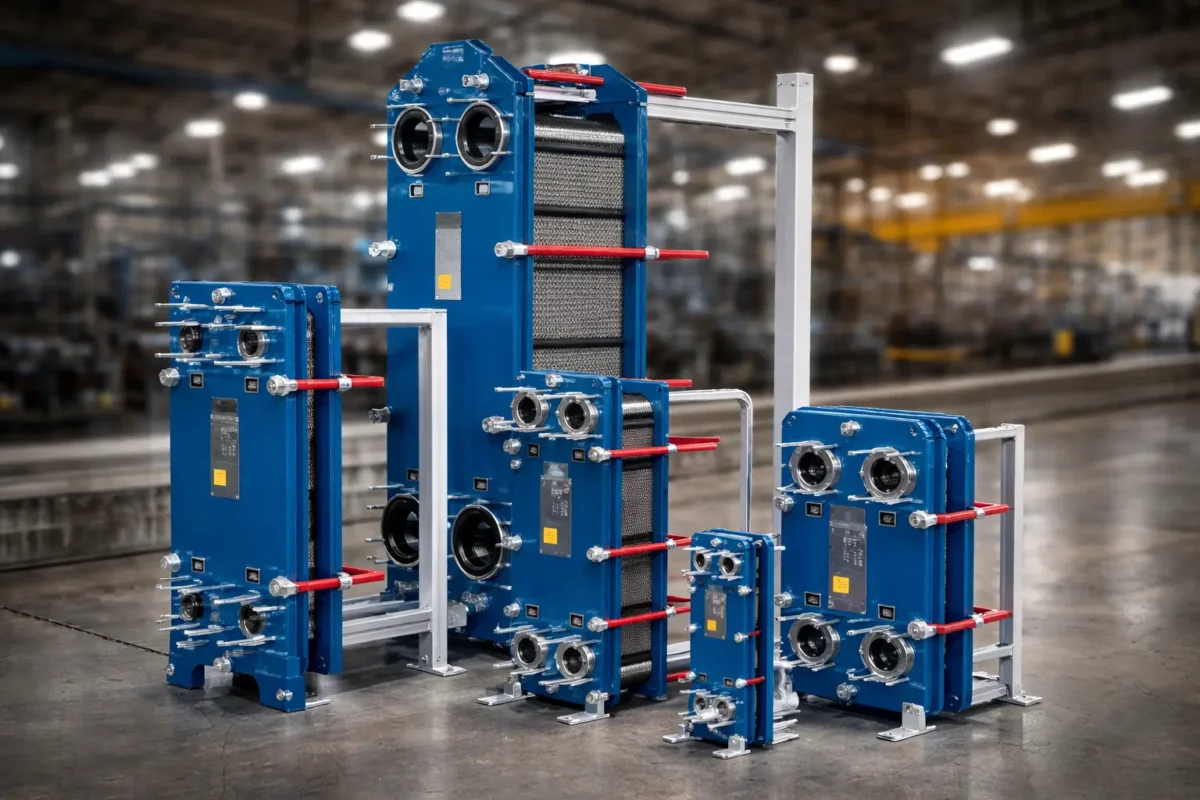
Understanding plate heat exchanger types helps buyers choose the correct solution.

Gasketed Plate Heat Exchanger

Best for applications requiring easy maintenance and future expansion.

Suitable for:

  • HVAC
  • food processing
  • chemical plants
  • utility systems

Welded Plate Heat Exchanger

A Welded plate heat exchanger is ideal for high-pressure and demanding industrial applications where robust construction is required.

Suitable for:

  • refrigerant systems
  • industrial cooling
  • chemical processing
  • aggressive media

Semi-Welded Units

Used in applications requiring enhanced sealing and durability.

Brazed Units

Used for compact commercial and HVAC requirements.

Choosing the right plate heat exchanger types depends on process duty, pressure, and maintenance preference.

Welded Plate Heat Exchanger Applications

A Welded plate heat exchanger is widely used in industries requiring superior structural strength and reliable operation under severe conditions.

Typical applications include:

  • refrigeration plants
  • ammonia cooling systems
  • oil cooling
  • industrial process heating
  • heavy-duty chemical operations

The major advantage of a Welded plate heat exchanger is its ability to operate under demanding temperature and pressure conditions while maintaining efficient heat transfer.

Plate Heat Exchanger Capacity

One of the highest commercial-intent searches is plate heat exchanger capacity.

Capacity depends on:

  • number of plates
  • plate size
  • flow rate
  • thermal duty
  • temperature difference
  • fluid properties

A correctly selected plate heat exchanger capacity ensures:

  • no underperformance
  • no oversizing cost
  • energy efficiency
  • future scalability

For example, HVAC projects may require different plate heat exchanger capacity compared to dairy pasteurization or industrial cooling systems.

At SRJ, we help clients calculate the right plate heat exchanger capacity based on actual operating parameters.

Plate Heat Exchanger Price

The Plate Heat Exchanger Price depends on several commercial and technical factors.

Major price factors include:

  • size and capacity
  • number of plates
  • material grade
  • pressure rating
  • custom engineering
  • application type
  • replacement parts requirement

A standard Plate Heat Exchanger Price quote should always include:

  • technical specifications
  • material details
  • delivery timeline
  • service support
  • warranty terms

Instead of focusing only on Plate Heat Exchanger Price, industries should consider total lifecycle cost.

A slightly better engineered plate heat exchanger often reduces maintenance and energy cost significantly.

Plate Heat Exchanger Diagram

A plate heat exchanger diagram helps explain the flow arrangement and working mechanism.

The typical plate heat exchanger diagram includes:

  • frame structure
  • inlet and outlet nozzles
  • alternating hot and cold channels
  • corrugated plates
  • clamping assembly

For engineering documentation, a proper plate heat exchanger diagram is essential during installation and maintenance.

SRJ can support clients with technical drawings and project-specific plate heat exchanger diagram documentation.

Plate Heat Exchanger PDF

Many buyers search for plate heat exchanger PDF for technical reference and procurement approvals.

A professional plate heat exchanger PDF should include:

  • product overview
  • technical specifications
  • capacity table
  • dimensional drawing
  • material details
  • maintenance guide

For project approvals, consultant reviews, and procurement documentation, a complete plate heat exchanger PDF improves buying confidence.

Why Choose SRJ Heatt Exchangers India Pvt Ltd

As a trusted Plate Heat Exchanger manufacturer in India, SRJ focuses on industrial-grade performance and application-driven engineering.

Our strengths include:

  • custom thermal design
  • high-efficiency products
  • strong after-sales support
  • quick spare availability
  • industrial-grade construction
  • India and GCC support

Whether you need a Welded plate heat exchanger, custom plate heat exchanger design, or application-specific plate heat exchanger capacity, our team supports complete project requirements.

Industries We Serve

Our plate heat exchanger solutions are widely used in:

  • HVAC and district cooling
  • dairy and food processing
  • pharmaceuticals
  • chemical plants
  • utilities
  • industrial cooling
  • process industries

This industry experience strengthens our E-E-A-T value through real-world application knowledge and commercial support.

Conclusion

A plate heat exchanger is one of the most efficient industrial thermal solutions available today. Whether your requirement is based on plate heat exchanger types, plate heat exchanger working principle, plate heat exchanger capacity, Welded plate heat exchanger, or Plate Heat Exchanger Price, selecting the right engineering partner is essential.

SRJ Heatt Exchangers India Pvt Ltd provides reliable, scalable, and commercially optimized solutions for industrial heat transfer requirements across India and export markets.
FAQs

1. What is a plate heat exchanger?

A plate heat exchanger is a compact thermal system that transfers heat between two fluids through corrugated metal plates without mixing them.

2. Who is a trusted plate heat exchanger manufacturer in India?

A reliable Plate Heat Exchanger manufacturer in India provides custom thermal solutions, industrial-grade materials, and long-term service support for HVAC and process industries.

3. What is the plate heat exchanger working principle?

The plate heat exchanger working principle is based on heat transfer through alternate plate channels where hot and cold fluids flow separately.

4. How is plate heat exchanger capacity calculated?

Plate heat exchanger capacity depends on flow rate, temperature difference, thermal duty, number of plates, and fluid properties.

5. What is a welded plate heat exchanger?

A Welded plate heat exchanger is designed for high-pressure and demanding industrial applications where stronger construction is required.

6. What factors affect plate heat exchanger price?

Plate Heat Exchanger Price depends on size, material, plate count, pressure rating, and custom design requirements.

7. What are the main plate heat exchanger types?

Common plate heat exchanger types include gasketed, welded, semi-welded, and brazed models.

8. Where is a plate heat exchanger used?

A plate heat exchanger is used in HVAC, dairy, food processing, pharmaceuticals, chemicals, and industrial cooling systems.

9. Can I get a plate heat exchanger PDF and diagram?

Yes, technical plate heat exchanger PDF documents and plate heat exchanger diagram files are available for engineering and procurement use.

10. Why choose SRJ as a plate heat exchanger manufacturer in India?

SRJ provides reliable industrial thermal solutions with strong design support, quick service, and optimized plate heat exchanger design.

Kelvion PHE Plates Manufacturer in India and Kelvion Heat Exchangers Solutions

Industrial heat transfer systems are critical for maintaining temperature control, energy efficiency, and operational stability across various sectors such as HVAC infrastructure, chemical processing, food production, pharmaceuticals, and power generation. A kelvion plate heat exchanger is widely recognized for its efficient thermal performance and compact design, making it a preferred solution in modern industrial applications.

However, the long-term performance of kelvion heat exchangers depends significantly on the quality, compatibility, and precision of the plates used within the system. This is why industries actively search for a reliable Kelvion PHE Plates Manufacturer in India and a trusted Kelvion PHE Plates Supplier to ensure consistent system performance and minimal downtime.

SRJ Heatt Exchangers India Pvt Ltd manufactures and supplies high-quality compatible plates designed for various Kelvion heat exchanger models. The company focuses on engineering accuracy, material strength, and industrial reliability to support demanding applications.

Understanding Kelvion Plate Heat Exchanger Technology

A kelvion plate heat exchanger operates by transferring heat between two fluids through a series of thin, corrugated metal plates. These plates are arranged to form alternate flow channels, ensuring that hot and cold fluids remain separated while allowing efficient heat exchange.

The corrugated plate design creates turbulence in the fluid flow, which increases heat transfer efficiency and reduces energy loss. Because of this design, kelvion heat exchangers offer:

  • High thermal efficiency
  • Compact footprint
  • Flexible configuration
  • Easy maintenance and cleaning
  • Reduced energy consumption

These features make them suitable for industries that require precise temperature control and high-performance thermal systems.

Role of Plates in Kelvion Heat Exchangers

The plates are the core component of any kelvion plate heat exchanger. They directly influence heat transfer efficiency, pressure drop, and overall system reliability. Poor-quality plates can lead to leakage, reduced performance, and increased maintenance costs.

A professional Kelvion PHE Plates Manufacturer ensures that each plate meets strict engineering standards. Key aspects of plate design include:

  • Chevron pattern geometry for optimal turbulence
  • Accurate port alignment for uniform fluid distribution
  • Correct plate thickness for pressure handling
  • Smooth surface finish to reduce fouling
  • High corrosion resistance for industrial fluids

These factors are essential for maintaining the efficiency and durability of kelvion heat exchangers in industrial environments.

Kelvion PHE Plates Manufacturer in India

Selecting the right Kelvion PHE Plates Manufacturer in India is crucial for ensuring compatibility with existing heat exchanger systems. SRJ Heatt Exchangers India Pvt Ltd manufactures plates using advanced forming processes and high-grade materials.

As a leading Kelvion PHE Plates Manufacturer, the company ensures:

  • Precision pressing of plates
  • Consistent dimensional accuracy
  • Reliable performance under pressure and temperature variations
  • Compatibility with multiple Kelvion models

The focus on engineering precision allows industries to replace plates without affecting system performance or requiring major modifications.

Kelvion PHE Plates Supplier for Industrial Applications

Industries often require a dependable Kelvion PHE Plates Supplier to support maintenance operations and system upgrades. SRJ Heatt Exchangers India Pvt Ltd supplies compatible plates designed for fast installation and reliable operation.

As a trusted Kelvion PHE Plates Supplier, the company provides:

  • Ready-to-install plate solutions
  • Consistent product availability
  • Support for various industrial applications
  • Reduced downtime during maintenance

This ensures that industrial systems continue to operate efficiently without interruption.

Materials Used in Kelvion PHE Plates Manufacturing

Material selection plays a vital role in the performance of plates used in kelvion heat exchangers. A reliable Kelvion PHE Plates Manufacturer in India uses materials suitable for different industrial conditions.

Common materials include:

  • Stainless steel for general industrial applications
  • Titanium for corrosive environments
  • Special alloys for high-temperature operations

These materials provide strength, corrosion resistance, and long service life, ensuring reliable performance under demanding conditions.

Applications of Kelvion Heat Exchangers

A kelvion plate heat exchanger is used across a wide range of industries due to its efficiency and versatility. Major applications include:

HVAC Systems

Used for heating and cooling processes in commercial buildings, ensuring energy-efficient temperature control.

Chemical and Process Industries

Used for handling various fluids under controlled temperature conditions in chemical processing plants.

Food and Beverage Industry

Used for pasteurization, heating, and cooling processes while maintaining hygiene standards.

Power and Energy Sector

Used for heat recovery and energy optimization in power generation plants.

Pharmaceutical Industry

Used for precise temperature control in production processes.

In all these applications, working with a reliable Kelvion PHE Plates Supplier ensures consistent system performance.

Maintenance and Replacement of Kelvion PHE Plates

Regular maintenance is essential to ensure the efficient operation of kelvion heat exchangers. Over time, plates may experience fouling, corrosion, or wear due to operating conditions.

Key maintenance practices include:

  • Periodic inspection of plates
  • Cleaning to remove deposits and scaling
  • Replacement of damaged or worn plates
  • Ensuring proper alignment during reassembly

Using high-quality plates from a trusted Kelvion PHE Plates Manufacturer helps reduce maintenance frequency and improve system reliability.

Benefits of Choosing the Right Manufacturer and Supplier

Working with an experienced Kelvion PHE Plates Manufacturer in India and a dependable Kelvion PHE Plates Supplier offers several advantages:

  • Improved heat transfer efficiency
  • Reduced operational downtime
  • Lower maintenance costs
  • Long equipment lifespan
  • Reliable compatibility with existing systems

These benefits are essential for industries that depend on uninterrupted thermal operations.

Why Choose SRJ Heatt Exchangers India Pvt Ltd

SRJ Heatt Exchangers India Pvt Ltd is a trusted name in the manufacturing and supply of compatible plates for industrial heat exchanger systems.

As a recognized Kelvion PHE Plates Manufacturer in India and supplier, the company offers:

  • Precision-engineered plate solutions
  • High-quality industrial materials
  • Strict quality control processes
  • Reliable supply across India
  • Technical support for installation and maintenance

The company focuses on delivering performance-driven solutions tailored to industrial requirements.

Conclusion

A kelvion plate heat exchanger plays a vital role in modern industrial heating and cooling systems. The efficiency and reliability of these systems depend on the quality of plates used within the equipment.

Choosing a trusted Kelvion PHE Plates Manufacturer in India and a reliable Kelvion PHE Plates Supplier ensures optimal performance, reduced maintenance costs, and long-term operational stability.

SRJ Heatt Exchangers India Pvt Ltd provides precision-manufactured plates designed for kelvion heat exchangers, helping industries maintain efficient and reliable heat transfer systems across various applications.

Frequently Asked Questions (FAQs)

1. What is a kelvion plate heat exchanger?

A kelvion plate heat exchanger is an industrial heat transfer system that uses multiple plates to transfer heat between fluids efficiently without mixing them, ensuring compact design and high performance.

2. Who is a Kelvion PHE Plates Manufacturer in India?

A Kelvion PHE Plates Manufacturer in India provides precision-engineered compatible plates designed for industrial heat exchanger systems, ensuring proper fitment and reliable thermal performance.

3. What does a Kelvion PHE Plates Supplier provide?

A Kelvion PHE Plates Supplier provides replacement plates for maintenance, system upgrades, and performance optimization in Kelvion heat exchangers used across industries.

4. Where are kelvion heat exchangers used?

kelvion heat exchangers are widely used in HVAC systems, chemical processing, food and beverage industries, power plants, and industrial cooling applications.

5. Why is plate quality important in kelvion plate heat exchanger systems?

High-quality plates ensure efficient heat transfer, proper pressure handling, reduced leakage, and long-term performance in kelvion plate heat exchanger systems.

Welded Plate Heat Exchanger: Complete Guide to Welded Plate and Frame & Semi Welded Systems

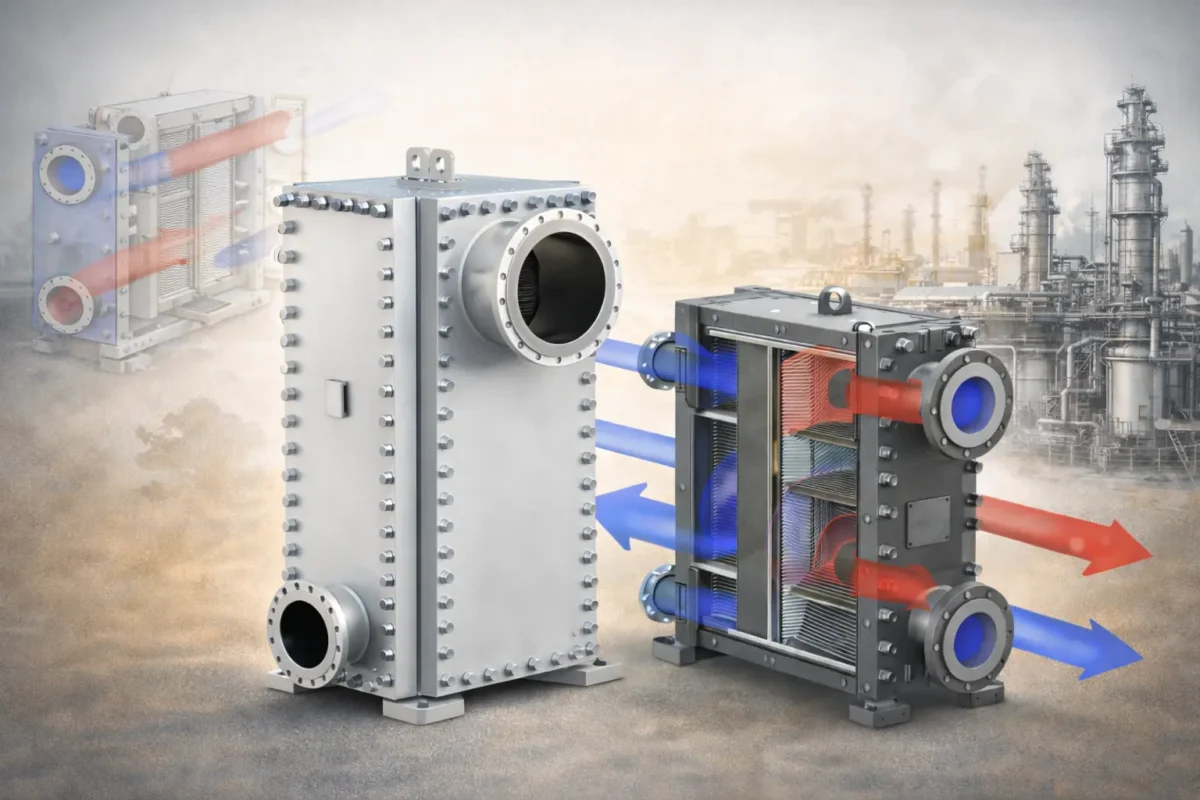
A welded plate heat exchanger is designed for industrial environments where high pressure, elevated temperature, and aggressive fluids make conventional gasketed systems unsuitable. In demanding applications such as chemical processing, refinery operations, ammonia refrigeration, and energy plants, a properly engineered welded plate and frame heat exchanger ensures safety, durability, and long-term thermal efficiency.

Unlike traditional units that rely fully on elastomer gaskets, a semi welded plate heat exchanger or fully welded system eliminates leak risks in critical zones by laser welding selected channels. Each welded plate is manufactured to withstand mechanical stress, corrosion exposure, and continuous-duty operation. This makes the welded heat exchanger an ideal solution for industries where operational reliability directly impacts productivity and safety.

This guide explains working principles, construction types, design benefits, industrial applications, selection criteria, and maintenance strategy — written in a practical, real-world format for plant engineers and industrial buyers.

What Is a Welded Plate Heat Exchanger?

A welded plate heat exchanger uses corrugated metal plates that are welded together instead of being fully gasket-sealed. Welding enhances mechanical strength and prevents leakage when handling:

  • Ammonia and refrigerants
  • High-pressure steam
  • Aggressive chemicals
  • Hydrocarbons
  • High-temperature process fluids

In a typical welded plate and frame heat exchanger, the plates are welded in pairs to create cassettes. These welded cassettes are then assembled within a frame structure, allowing one side to remain gasketed for serviceability while the other side remains welded for safety.

This hybrid approach combines efficiency with durability.

Types of Welded Plate Heat Exchangers

Industrial systems are available in multiple configurations depending on process conditions.

1. Fully Welded Plate Heat Exchanger

  • No gaskets between plates
  • Designed for extreme pressure and temperature
  • Suitable for refinery and petrochemical plants

2. Semi Welded Plate Heat Exchanger

  • Plates welded in pairs
  • One side gasketed for maintenance
  • Common in ammonia refrigeration and chemical plants

3. Welded Plate and Frame Heat Exchanger

  • Frame-supported structure
  • Expandable design
  • Easier inspection compared to fully welded block types

Each configuration balances maintenance accessibility with operational strength.

For industrial-grade options, explore Welded Plate Heat Exchangers and Semi-Welded Plate Heat Exchangers.

How a Welded Heat Exchanger Works

The working principle remains similar to other plate-based systems:

  1. Fluids enter alternate channels.
  2. Corrugated plates increase turbulence.
  3. Heat transfers across thin metal walls.
  4. Fluids exit separately without mixing.

The difference lies in structural integrity. A welded plate assembly withstands higher mechanical stress compared to gasket-only systems.

Because of the compact design and high surface turbulence, these systems offer excellent heat transfer coefficients while maintaining a small footprint.

Why Choose a Semi Welded Plate Heat Exchanger?

In applications involving ammonia or corrosive media, elastomer gaskets may degrade quickly. A semi welded plate heat exchanger solves this issue by welding the aggressive-fluid channel while keeping the secondary side gasketed.

Benefits:

  • Reduced leakage risk
  • Improved pressure handling
  • Lower gasket exposure
  • Controlled maintenance access
  • Better long-term reliability

Industries such as cold storage, refrigeration plants, and chemical manufacturing widely use semi welded configurations.

Engineering Design of a Welded Plate

Every welded plate must be manufactured with precision. Key design parameters include:

  • Plate thickness (commonly 0.6–1.0 mm or higher)
  • Corrugation angle
  • Port diameter
  • Material grade (SS316, Titanium, special alloys)
  • Laser welding quality
  • Pressure rating

Proper welding technique ensures:

  • Uniform heat distribution
  • No micro-cracks
  • Structural rigidity
  • Pressure containment

According to industrial heat transfer studies referenced by institutions such as MIT OpenCourseWare (https://ocw.mit.edu), turbulence enhancement significantly improves thermal efficiency — which is why plate corrugation patterns matter greatly.

Applications of Welded Plate and Frame Heat Exchanger

A welded plate and frame heat exchanger is widely used in:

  • Petrochemical plants
  • Oil and gas processing
  • Ammonia refrigeration
  • Chemical manufacturing
  • Power plants
  • Marine cooling
  • Heat recovery systems

These industries require consistent thermal control under fluctuating load conditions.

For complete industrial solutions, visit SRJ Heatt Exchangers India Pvt. Ltd. and learn more about expertise at About Us.

Comparison: Welded vs Gasketed Plate Heat Exchanger

FeatureWelded Plate Heat ExchangerGasketed System
Pressure HandlingVery HighModerate
Temperature RangeHighMedium
MaintenanceModerateEasy
Leak RiskVery LowDepends on gasket
Chemical ResistanceExcellentLimited by gasket

If process safety is critical, a welded heat exchanger is often preferred.

Key Advantages of Welded Plate Heat Exchanger

  • Compact footprint
  • High thermal efficiency
  • Reduced leakage probability
  • Suitable for aggressive fluids
  • Lower long-term maintenance
  • High-pressure stability
  • Extended operational lifespan

These advantages make welded systems ideal for mission-critical operations.

Selection Checklist for Industrial Buyers

Before choosing a welded plate heat exchanger, evaluate:

  • Operating pressure
  • Fluid chemical composition
  • Maximum temperature
  • Flow rate
  • Future expansion needs
  • Cleaning accessibility
  • Maintenance strategy

Providing accurate technical parameters ensures correct sizing and performance optimization.

Maintenance and Replacement Considerations

Although welded systems are durable, periodic inspection remains important.

Monitor for:

  • Pressure imbalance
  • Reduced heat transfer efficiency
  • Fouling or scaling
  • Structural vibration

Replacement components and support services are available at Replacement Parts for compatible industrial systems.

Frequently Asked Questions 

1. What is a welded plate heat exchanger used for?

It is used in high-pressure and high-temperature industrial applications where gasket-only systems may not be suitable.

2. What is the difference between welded plate and semi welded plate heat exchanger?

In semi welded systems, plates are welded in pairs and partially gasketed, whereas fully welded systems eliminate gaskets between plates.

3. Are welded plate heat exchangers suitable for ammonia?

Yes, semi welded configurations are commonly used in ammonia refrigeration plants.

4. Can a welded plate and frame heat exchanger be expanded?

Some frame-supported welded systems allow limited expansion, depending on design.

5. Is maintenance difficult in welded heat exchangers?

Maintenance is less frequent compared to gasketed systems, but inspection requires professional handling.

Final Thoughts

A welded plate heat exchanger offers a strong balance between compact design and heavy-duty performance. Whether selecting a welded plate and frame heat exchanger for refinery duty or a semi welded plate heat exchanger for refrigeration plants, choosing the correct configuration ensures operational safety and long-term efficiency.

In industries where downtime and leakage risks cannot be tolerated, investing in a properly engineered welded heat exchanger is not just a technical decision — it is a strategic one.


Plate Heat Exchanger: Complete Technical Guide on Working Principle, Design, Types, Applications & Selection

A plate heat exchanger is a highly efficient device used to transfer heat between two fluids without allowing them to mix. It achieves heat transfer by passing fluids through a stack of thin metal plates, where one fluid flows on one side of the plate and another fluid flows on the opposite side. The large surface area of the plates and the turbulent flow created by their corrugated design allow for rapid and efficient heat exchange.

Plate heat exchangers are widely used in industries such as HVAC, food processing, dairy, beverages, chemical, pharmaceutical, distillery, sugar, power, and marine systems due to their compact size, high efficiency, and ease of maintenance.

What Is a Plate Heat Exchanger?

A plate heat exchanger consists of multiple thin plates pressed together in a frame. These plates create alternate channels for hot and cold fluids. Heat is transferred through the metal plates while the fluids remain separated. Unlike shell-and-tube heat exchangers, plate heat exchangers provide a much larger heat transfer area within a smaller volume, resulting in faster and more efficient heat exchange.

Principle of Plate Heat Exchanger

The principle of a plate heat exchanger is based on indirect heat transfer. Heat flows from a hot fluid to a cold fluid through a conductive metal surface. The fluids move in separate channels formed by the plates, and energy is transferred through the plate material without direct contact between the fluids.

The plates are corrugated to increase turbulence, which reduces boundary layer resistance and improves the overall heat transfer coefficient.

Plate Heat Exchanger Working Principle

In operation, fluids enter the heat exchanger through corner ports. Each plate directs the fluid into alternate channels, ensuring that hot and cold fluids always flow next to each other but never mix.

Most plate heat exchangers use counter-current flow, where the hot and cold fluids move in opposite directions. This flow arrangement maintains a high temperature difference across the entire plate surface, allowing maximum heat recovery and close temperature approach.

Flow Types in Plate Heat Exchangers

Plate heat exchangers can be designed with different flow arrangements:

Counter-Current Flow

This is the most efficient flow type. It allows maximum heat transfer and is commonly used in heating, cooling, and energy recovery applications.

Parallel Flow

Both fluids move in the same direction. This is used when controlled temperature change is required.

Multi-Pass and Mixed Flow

Used in large industrial systems where pressure drop, temperature limits, or flow balancing is required.

Plate Heat Exchanger Design

The design of a plate heat exchanger depends on temperature, pressure, flow rate, and fluid characteristics. Engineers select plate size, corrugation pattern, material, and gasket type based on process requirements.

Plates

Plates are usually made from:

  • Stainless steel (SS304, SS316)
  • Titanium (for corrosive fluids)
  • Nickel or special alloys (for chemical applications)

Plate thickness typically ranges from 0.3 mm to 1 mm.

Corrugation Pattern

Corrugations create turbulence and mechanical strength. The angle and depth of corrugation affect heat transfer and pressure drop.

Gaskets

Gaskets seal the plates and guide the fluid flow. Common gasket materials include EPDM, NBR, Viton, and silicone rubber.

Frame

The frame holds the plates together and allows easy disassembly for inspection, cleaning, or capacity adjustment.

Types of Plate Heat Exchangers

Gasketed Plate Heat Exchanger

  • Removable plates
  • Easy cleaning and maintenance
  • Widely used in food, dairy, HVAC, and process industries

Brazed Plate Heat Exchanger

  • Plates are brazed using copper or nickel
  • Compact and maintenance-free
  • Used in refrigeration, chillers, heat pumps

Welded Plate Heat Exchanger

  • No gaskets
  • Suitable for high pressure and temperature
  • Used in chemical, oil, and power plants

Semi-Welded Plate Heat Exchanger

  • Combination of welded and gasketed design
  • Ideal for ammonia and aggressive fluids

Plate Heat Exchanger Diagram and Documentation

A plate heat exchanger diagram shows:

  • Plate arrangement
  • Flow direction
  • Inlet and outlet ports
  • Gasket layout
  • Frame construction

Detailed technical documents and diagrams are available in engineering references such as:

These sources provide validated engineering concepts, equations, and design methodologies used worldwide.

Applications of Plate Heat Exchangers

Plate heat exchangers are used in:

  • Heating and cooling systems
  • Chilled water and hot water circuits
  • Dairy pasteurization
  • Beverage processing
  • Chemical reactions
  • Pharmaceutical manufacturing
  • Distillery and ethanol plants
  • Sugar and food processing
  • Marine cooling systems
  • Power plant heat recovery

Plate Heat Exchanger Price and Selection

The price of a plate heat exchanger depends on:

  • Plate material and thickness
  • Number of plates
  • Gasket type
  • Design pressure and temperature
  • Application-specific requirements

While the initial cost may be higher than traditional exchangers, plate heat exchangers offer lower operating costs, reduced energy consumption, and easier maintenance, making them economical in long-term operation.

Maintenance and Cleaning

Proper maintenance ensures long service life and consistent performance:

  • Regular cleaning to remove fouling
  • Inspection of gaskets and plates
  • Monitoring pressure drop
  • Replacing damaged gaskets
  • Periodic performance checks

Gasketed models can be opened easily for manual cleaning, while brazed units are cleaned using chemical flushing methods.

Conclusion

A plate heat exchanger is a compact, efficient, and reliable solution for modern heat transfer needs. Its ability to deliver high thermal performance, flexible capacity, and easy maintenance makes it suitable for a wide range of industrial and commercial applications. With correct design and proper maintenance, a plate heat exchanger can operate efficiently for many years while reducing energy consumption and operating costs.

Frequently Asked Questions

1. What is a plate heat exchanger and how does it work?

A plate heat exchanger is a device that transfers heat between two fluids using thin metal plates. Hot and cold fluids flow through alternate channels formed between the plates. Heat is transferred through the plate surface without mixing the fluids, allowing efficient and controlled temperature exchange.

2. Why is a plate heat exchanger more efficient than a shell-and-tube exchanger?

A plate heat exchanger has a much larger heat transfer area within a smaller space. The corrugated plates create turbulent flow, which improves heat transfer. This design allows faster temperature change, better energy recovery, and closer temperature approach compared to shell-and-tube exchangers.

3. What type of flow is commonly used in plate heat exchangers?

Most plate heat exchangers use counter-current flow, where hot and cold fluids move in opposite directions. This arrangement maintains a higher temperature difference along the entire plate length and provides maximum heat transfer efficiency.

4. What materials are used to manufacture plate heat exchangers?

Plates are typically made from stainless steel, titanium, or special alloys depending on the application. Gaskets are made from materials such as EPDM, NBR, Viton, or silicone rubber. Material selection depends on temperature, pressure, and fluid compatibility.

5. How often should a plate heat exchanger be cleaned?

Cleaning frequency depends on the fluid quality and operating conditions. In clean systems, annual inspection may be sufficient. In applications with fouling or scaling, cleaning may be required every few months to maintain heat transfer efficiency and prevent pressure drop increase.