
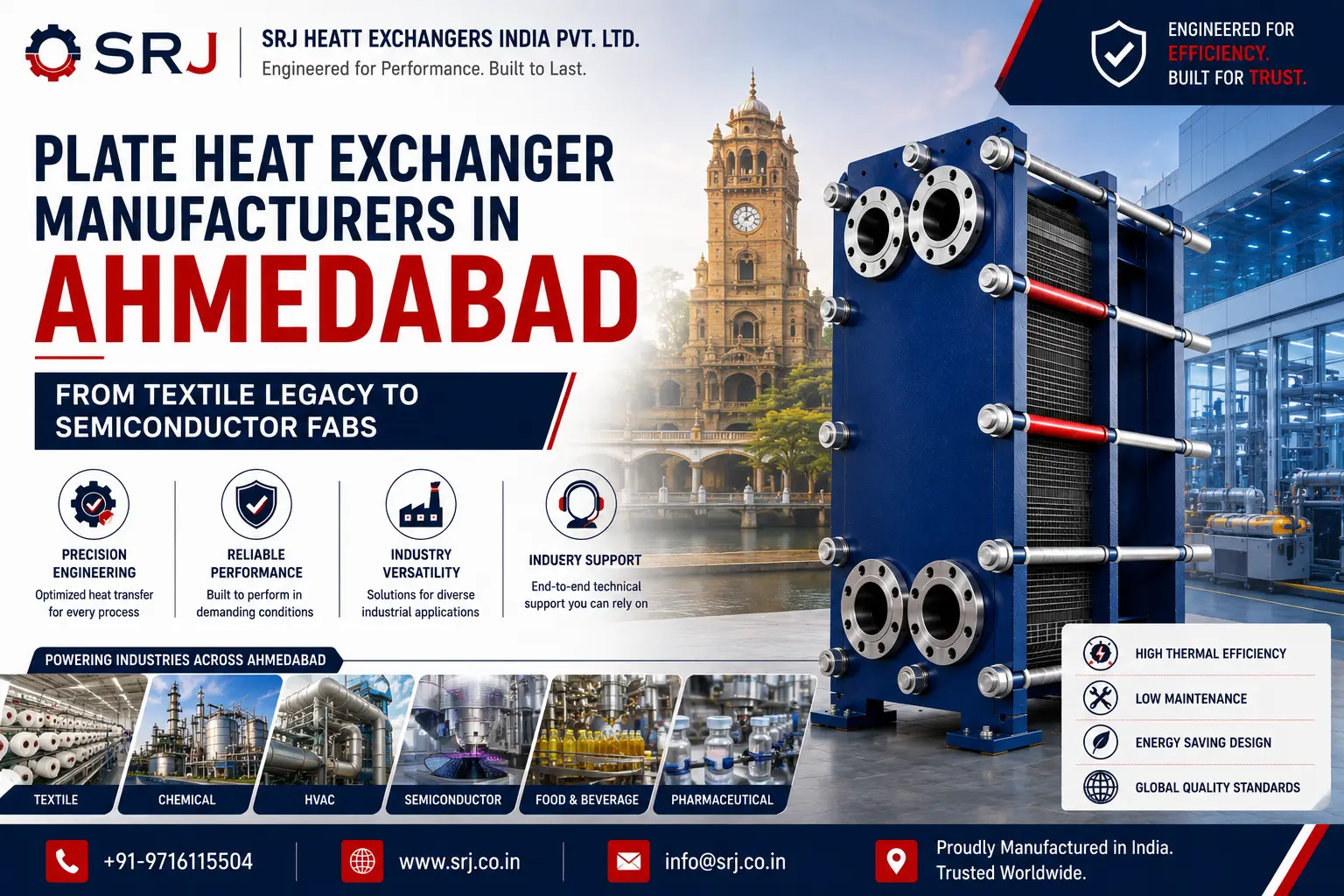
Ahmedabad earned its old nickname, the “Manchester of India,” on the back of its textile mills — but the city’s industrial identity has shifted dramatically since, and that shift is exactly why sourcing plate heat exchanger manufacturers in Ahmedabad today means something broader than it did a decade ago. Chemicals, pharmaceuticals, auto components, and now semiconductor manufacturing all sit within the wider Ahmedabad industrial belt, spread across satellite GIDC towns like Naroda, Sanand, Changodar, Bavla, Dholka, and Viramgam. Each of these has its own dominant duty, and a manufacturer who treats them all the same is the fastest route to an underperforming unit.
Sanand: When “Industrial Cooling” Means Semiconductor-Grade Water Systems
Sanand’s profile changed again in 2026 with the inauguration of Micron’s semiconductor Assembly, Test and Packaging facility — one of the world’s largest raised-floor cleanrooms, built with water-saving technology designed toward zero liquid discharge. Facilities at this level don’t run standard industrial cooling; they depend on tightly controlled process cooling water loops that need to stay isolated from cooling-tower water, precise temperature stability, and equipment built to hygiene and purity standards most industrial buyers never have to think about. For duty this sensitive, a semi-welded plate heat exchanger configuration — which removes gaskets from the critical fluid path while keeping one side serviceable — is often the more defensible choice than a fully gasketed unit. A PHE gasket supplier working in Sanand needs to understand this distinction, not just quote a standard industrial spec because the postal code says “GIDC.”
Naroda: Chemical-Heavy Duty Demands the Right Gasket Chemistry
Naroda is one of Ahmedabad’s oldest industrial estates, built around dye, pigment, and chemical processing — and that legacy means gasket chemistry matters here more than almost anywhere else in the district. Aggressive chemical exposure degrades a standard NBR gasket quickly; Viton or other chemical-resistant compounds are usually the safer starting point, and plate material often needs to move to SS316 or higher where acids and process chemicals are directly involved. An experienced PHE gasket manufacturer in Naroda asks about your actual effluent and process chemistry before quoting a compound, rather than defaulting to whatever’s cheapest to stock.
Changodar and Bavla: Steady Demand From General Engineering
Changodar and Bavla, both along the NH8 industrial corridor southwest of the city, host a mix of general engineering, auto-component, and pharma-linked units running largely conventional PHE duties — process cooling, utility water circuits, and heating loops. What separates a good PHE plate manufacturer in Changodar or PHE plate supplier in Bavla from an average one isn’t exotic engineering; it’s whether they stock common plate sizes and can turn around a replacement without treating every order as custom.
Dholka and Viramgam: Industrial Heat Exchangers Beyond the Core GIDC Belt
Dholka’s economy leans toward agro-processing and general industry, with mostly straightforward water and mild-process cooling duty. Viramgam, further out toward the Little Rann, has a different consideration worth flagging: its long-standing salt production industry means some process equipment in the area deals with saline or brine-adjacent conditions, where standard SS304 plates corrode faster than expected — SS316 or higher is worth confirming if your process water carries any salinity. An industrial heat exchanger manufacturer serving Dholka or supplier serving Viramgam should ask about water chemistry specifically, not just flow rate and temperature, before quoting a plate spec.
Getting Plate Material and Gasket Compound Right
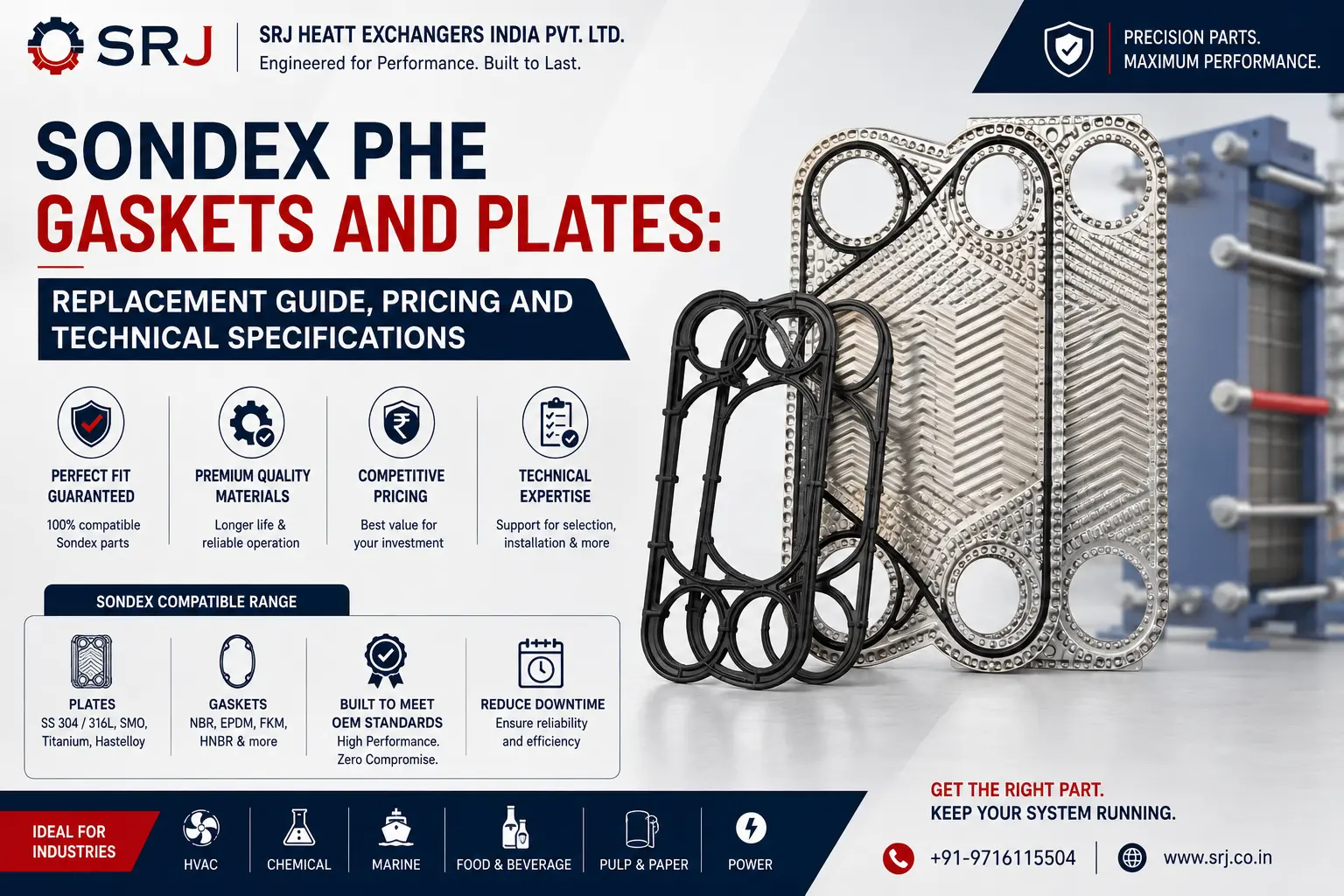
Across this entire belt, two decisions do most of the work: plate material matched to actual fluid chemistry, and gasket compound matched to temperature and chemical exposure. General water duty is fine on SS304; chemical, saline, or semiconductor-grade process water pushes you toward SS316 or better. NBR handles general and mild-oil duty economically; Viton earns its cost premium in chemical-heavy or high-purity applications. Ask for material test certificates and pressure test documentation before accepting a quote — manufacturers working within ISO 9001 quality frameworks, and referencing thermal design practices from bodies like ASHRAE, give you a documented basis to fall back on rather than a verbal promise.
Plate Type Heat Exchanger Manufacturers Serving Kerala
Ahmedabad’s manufacturing base isn’t the only one this belt supplies. Kerala’s seafood processing and IQF chilling lines, coir and natural rubber latex processing, coconut oil extraction, and dairy cooperatives all run on the same core PHE principles, just with different fluid chemistry and hygiene requirements than Gujarat’s industrial duties. A plate type heat exchanger manufacturer supplying Kerala needs the same discipline described above — matching plate and gasket to the actual process — dispatched with the logistics to support buyers well outside the home state.
Maintenance and What a Fair Quote Looks Like
A gradually rising pressure drop at constant flow rate is the earliest sign of fouling across every duty type in this belt, whether it’s chemical residue in Naroda, salinity in Viramgam, or particulate buildup in a semiconductor cooling loop in Sanand. A visual check every 3–6 months and a full teardown with gasket inspection every 12–18 months is a reasonable baseline, more frequent for high-purity or continuous-duty operations. On pricing, expect plate material, gasket compound, heat transfer area, and frame/connection size broken out as separate line items — a bundled number makes it far harder to compare two suppliers fairly, especially across a belt with duty types as varied as this one.
SRJ Heatt Exchangers India Pvt. Ltd. builds its approach around exactly this range — sizing plate and gasket selection differently for a semiconductor-grade cooling loop in Sanand, a chemical-duty unit in Naroda, or a conventional process line in Changodar or Bavla, with replacement parts stocked so buyers across this belt, and as far as Kerala, aren’t left waiting weeks for a routine part.
Conclusion
Sourcing plate heat exchanger manufacturers in Ahmedabad now means covering a genuinely wide range of duty — chemical processing in Naroda, semiconductor-grade purity in Sanand, general engineering in Changodar and Bavla, and salinity-aware sourcing in Viramgam. Match plate material and gasket compound to the actual fluid at each site, and equipment life becomes predictable instead of a repeated guess.
FAQs
Why does Sanand need a different plate heat exchanger approach than a typical GIDC town? The area’s new semiconductor manufacturing facility runs high-purity process cooling water loops, which call for tighter hygiene and construction standards than conventional industrial cooling.
Which gasket compound suits Naroda’s chemical-processing units? Viton or another chemical-resistant compound is usually the safer starting point, given the dye, pigment, and chemical processing common in the area.
Does salinity really affect plate material choice in Viramgam? Yes — saline or brine-adjacent process water corrodes standard SS304 plates faster than expected; SS316 or higher is worth confirming if salinity is present.
Should I choose SS304 or SS316 plates? SS304 for general water duties; SS316 or higher wherever chemicals, salinity, or high-purity process water are involved.
Can plate heat exchanger manufacturers in Ahmedabad supply buyers in Kerala? Yes — the same plate and gasket selection principles apply regardless of state, and manufacturers with proper logistics can dispatch nationwide.
What should I ask for before accepting a quote? Material test certificates, pressure test documentation, and a line-item breakdown covering plate material, gasket compound, frame, and freight.