
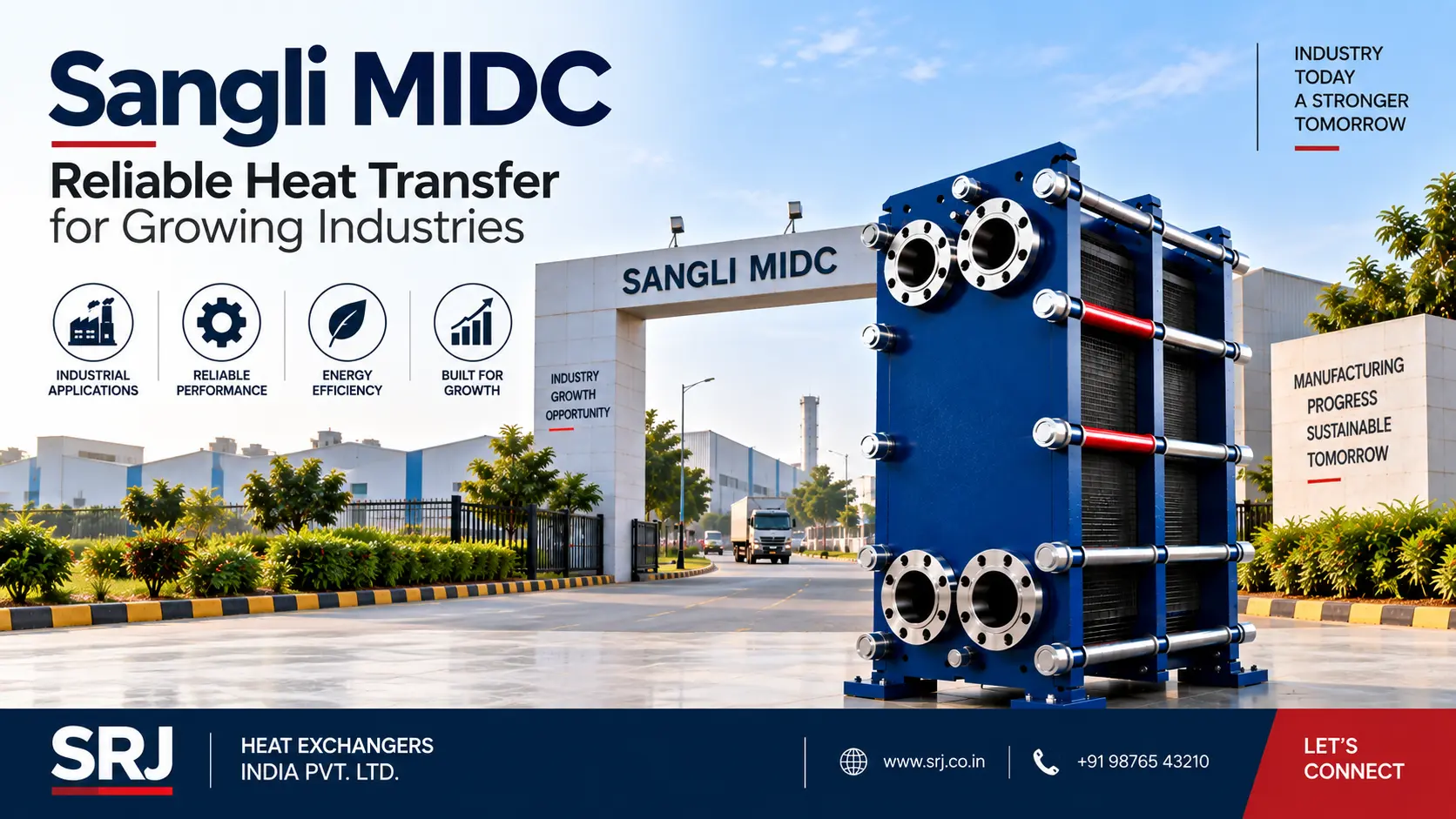
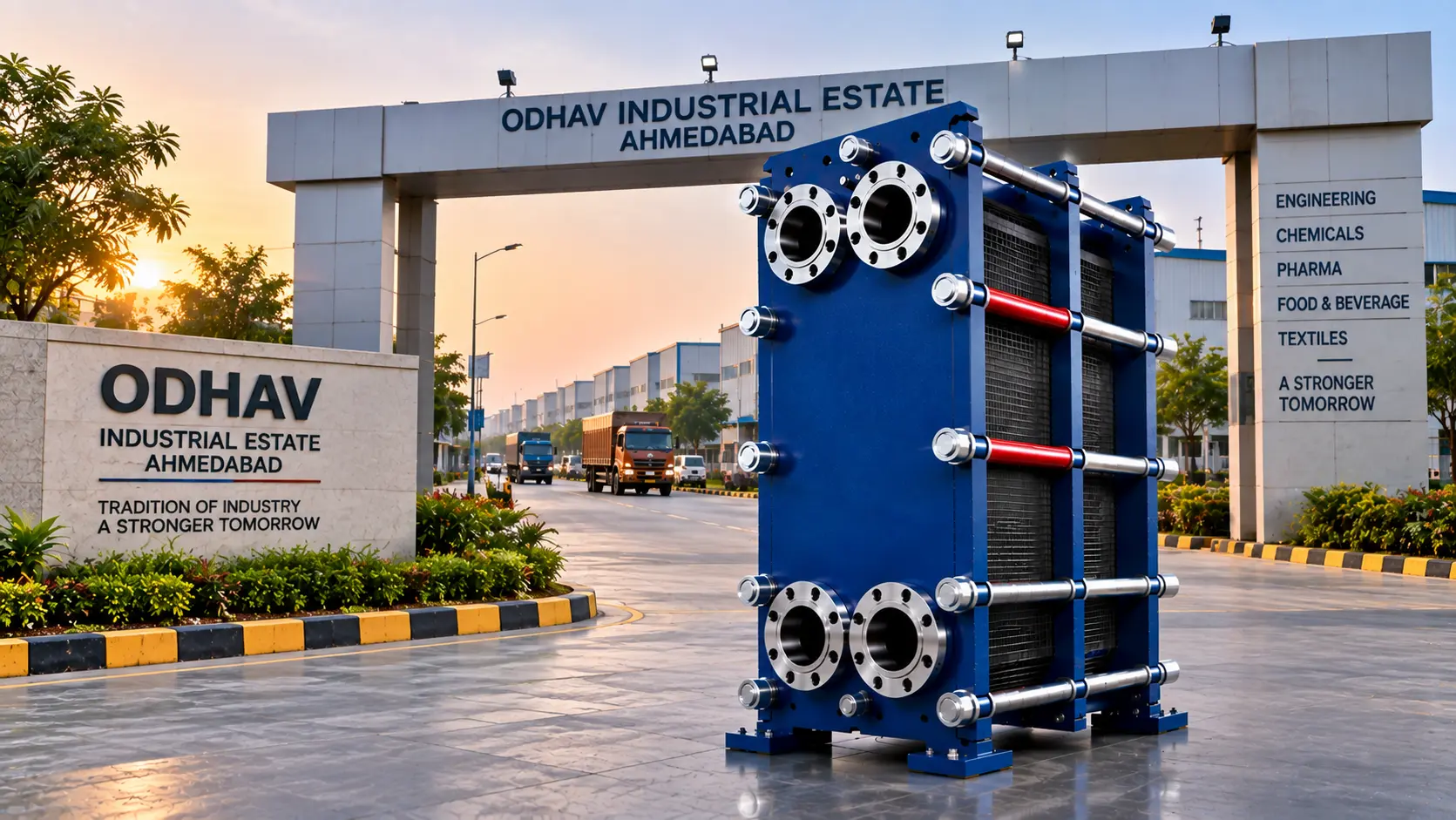
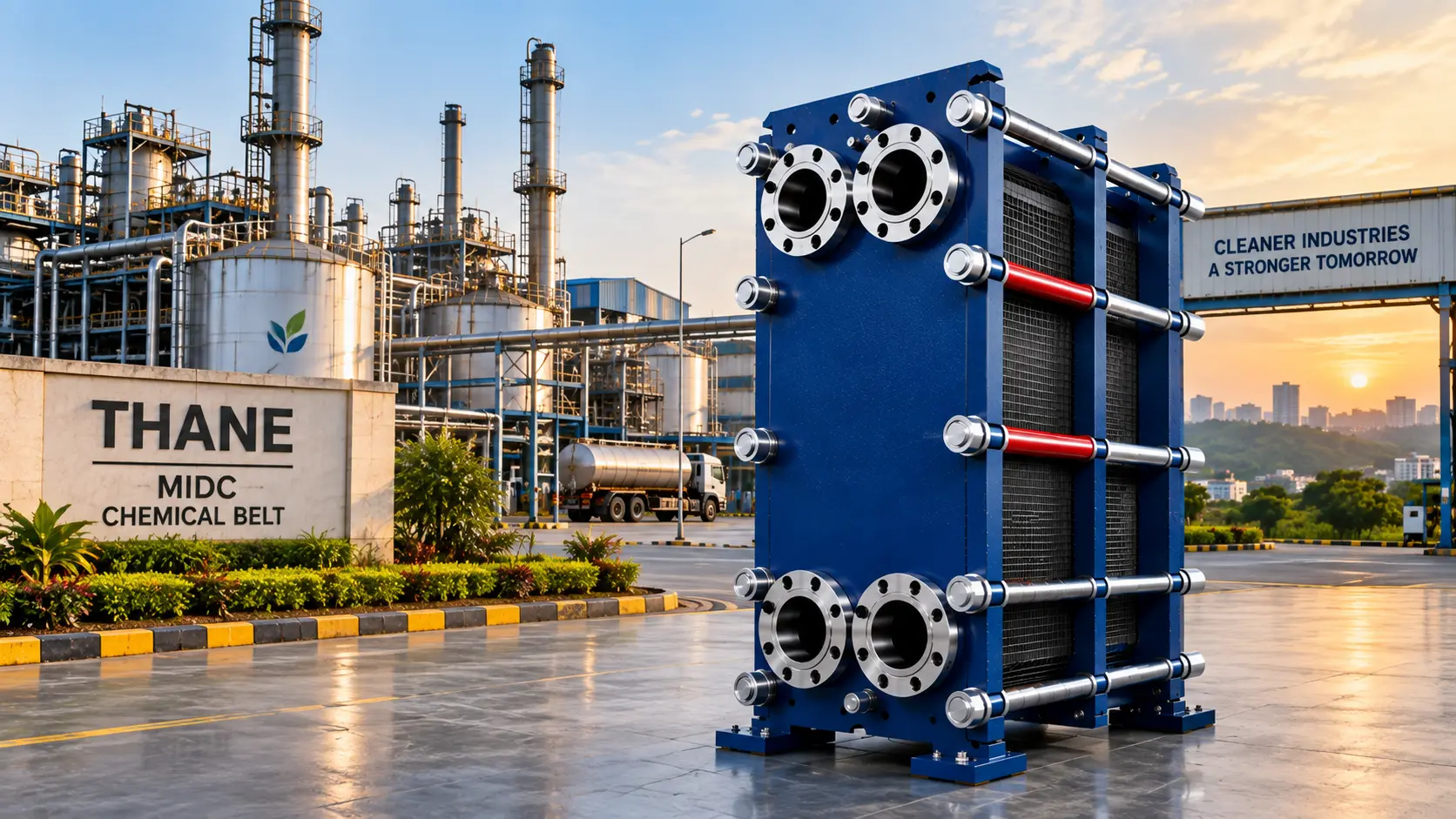
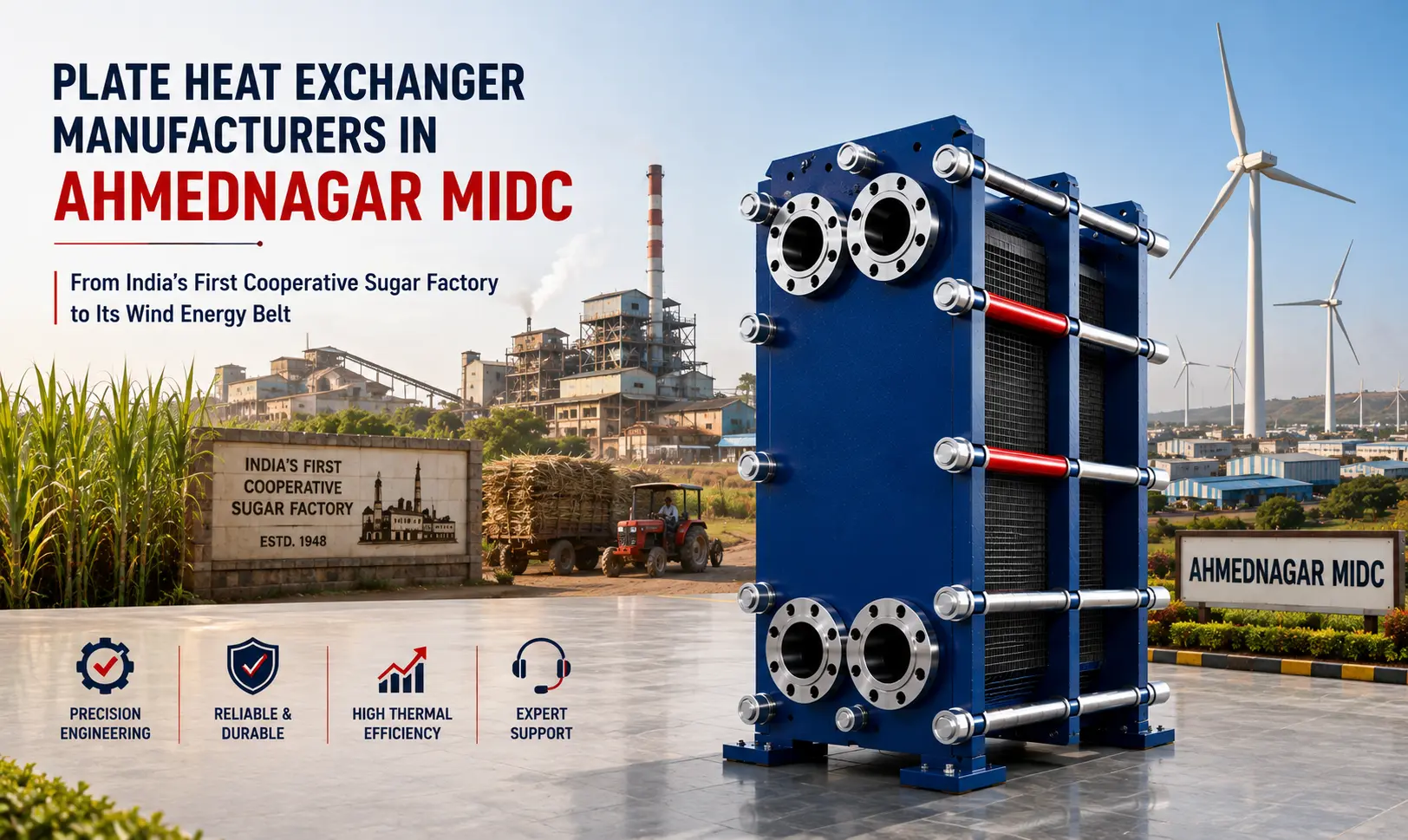
Most procurement teams looking up plate heat exchanger manufacturers in Patan GIDC aren’t shopping on price alone — they’ve usually had a unit fail early, or they’re setting up a new line and don’t want to repeat someone else’s mistake. Patan district’s industrial base runs on ginning and pressing, yarn spinning, agro-processing, and general engineering, spread across the district hub in Patan, the historic town of Siddhpur, and Radhanpur further west toward the Rann. Each of these draws on heat transfer equipment somewhere in its process — and the fastest way to a bad purchase is treating a plate heat exchanger (PHE) as a commodity part rather than a fluid-specific piece of engineering.
A quick baseline first: a plate heat exchanger works by passing hot and cold fluids through alternating channels formed by stacked, gasketed metal plates. The corrugated plate surface forces turbulent flow, which is what gives PHEs their heat-transfer advantage over older shell-and-tube units — and it’s also exactly why plate material and gasket choice matter so much more here than they would in a simpler design.
What Patan District’s Industrial Mix Tells You About Sourcing
Ginning and pressing units, yarn spinning mills, and agro-processing plants each put different demands on a PHE. A cotton ginning unit’s cooling loop rarely sees anything more aggressive than mineral-heavy groundwater, while a dyeing or finishing line downstream introduces chemical exposure that a basic plate pack isn’t built for. Radhanpur’s proximity to renewable energy infrastructure and its agro and oil-milling base add a further wrinkle: buyers there often need units that perform reliably despite less frequent access to a nearby service technician. None of this means the equipment needs to be exotic — it means the manufacturer needs to ask the right questions before quoting.
A Four-Step Way to Choose the Right Unit
Step 1 — Match plate material to your actual fluid. SS304 covers general water-to-water duties. Once dye chemicals, acids, or high-mineral process water enter the picture, move to SS316/SS316L; titanium is reserved for genuinely corrosive service. Skipping this step is the single biggest cause of early plate failure.
Step 2 — Pick the gasket compound for the temperature and chemistry, not the price. NBR is economical for general water and mild-oil duty but degrades under sustained heat. EPDM handles steam and hot water well. Viton costs more but is worth it for chemical-heavy or higher-temperature applications. This decision, more than any other, determines whether you’re replacing gaskets every few months or every few years.
Step 3 — Size around your real operating range, not the average. Share peak flow rate, not just typical flow, along with maximum design temperature and pressure. A unit sized to your average load will run near its limit constantly, fouling faster and losing efficiency within the first year.
Step 4 — Ask for documentation before you ask for a discount. Material test certificates and pressure test reports matter more than a lower quote. Manufacturers operating within ISO 9001 quality systems, and referencing thermal design practices published by bodies like ASHRAE, give you something to hold a warranty claim against — a verbal assurance doesn’t.
Comparing Sourcing Priorities Across the District
| Location | Typical PHE Duty | What Matters Most |
| Patan GIDC | General cooling, process heating, textile/agro units | Fast plate and gasket replacement, no waiting on custom orders |
| Siddhpur | Ginning, agro-processing, oil mills | A plate heat exchanger supplier who confirms fit before shipping, not after |
| Radhanpur | Oil milling, agro-processing, chemical-adjacent duty | An experienced PHE gasket manufacturer who gets compound chemistry right the first time |
Why Siddhpur Buyers Should Prioritize Supplier Responsiveness
Siddhpur’s ginning and agro-processing units generally run conventional PHE duties, but the towns further from the main GIDC belt have a real logistics problem: a delayed spare part means a delayed production run. A capable plate heat exchanger supplier in Siddhpur is one who can confirm plate compatibility over a phone call and dispatch from stock — not one who needs the whole unit shipped back just to measure a gasket.
Why Radhanpur Buyers Should Prioritize Gasket Expertise
Radhanpur’s oil-milling and agro-processing base, along with occasional chemical-adjacent duty, makes gasket chemistry the deciding factor more often than plate material. A generic rubber supplier will sell you a gasket that’s the right shape but the wrong compound for your temperature range — and it’ll fail early. A genuine PHE gasket manufacturer in Radhanpur works from your plate model and process conditions, not just a part number.
Signs Your Plate Heat Exchanger Needs Attention
- Pressure drop creeping upward at the same flow rate — the earliest sign of fouling, well before efficiency visibly drops.
- External moisture or a slow leak at the frame — almost always a gasket seating or bolt-torque issue, rarely the plate itself.
- Outlet temperature drifting from its usual range — often fouling, sometimes a partially blocked channel from a damaged plate near the inlet.
- Gaskets failing well short of their expected life — usually a compound mismatch rather than normal wear.
A visual check every 3–6 months and a full teardown with gasket inspection every 12–18 months is a reasonable baseline for most duties in this belt.
What a Fair Quote Looks Like
Plate material, gasket compound, total heat transfer area, and frame/connection size should appear as separate line items, with freight to Siddhpur or Radhanpur specifically called out rather than folded into one number. If a quote can’t be broken down this way, it’s hard to compare against a competing offer fairly.
SRJ Heatt Exchangers India Pvt. Ltd. has built its own quoting approach around this transparency — matching plate material and gasket compound to the buyer’s actual process rather than a standard catalogue spec, and keeping common configurations in stock so smaller-belt buyers in Siddhpur and Radhanpur aren’t stuck waiting weeks for a routine part.
Conclusion
The manufacturers worth shortlisting for plate heat exchanger manufacturers in Patan GIDC are the ones asking about your fluid chemistry and flow range before they quote a material — not the ones with the lowest number on page one. Get plate material and gasket compound right at the sourcing stage, and the rest of the equipment’s life becomes routine maintenance instead of repeat emergencies.
References
- ISO 9001 Quality Management — International Organization for Standardization
- ASHRAE — thermal systems and heat transfer engineering guidelines
- Bureau of Indian Standards (BIS) — Indian material and pressure equipment standards
- Gujarat Industrial Development Corporation (GIDC) — official industrial estate information for Patan and other Gujarat zones
FAQs
How does a plate heat exchanger work? Hot and cold fluids flow through alternating channels formed by stacked, gasketed plates — the corrugation creates turbulence that improves heat transfer without the two fluids mixing.
Should I choose SS304 or SS316 plates? SS304 is fine for general water duties. Move to SS316/SS316L wherever dye chemicals, acids, or high-mineral water are involved.
How do I pick between NBR, EPDM, and Viton gaskets? Match the compound to your temperature and chemical exposure — NBR for general/mild-oil duty, EPDM for steam and hot water, Viton for aggressive chemicals or higher heat.
Why did my gaskets fail early? Almost always a compound mismatch or uneven bolt torque during reassembly, not normal wear.
Can I get spares quickly if I’m based in Siddhpur or Radhanpur? Yes, provided your supplier stocks common plate and gasket sizes and doesn’t require the full unit shipped back to confirm fit.
What’s the earliest sign my PHE needs cleaning? A gradual rise in pressure drop at a constant flow rate, appearing before any visible drop in performance.