
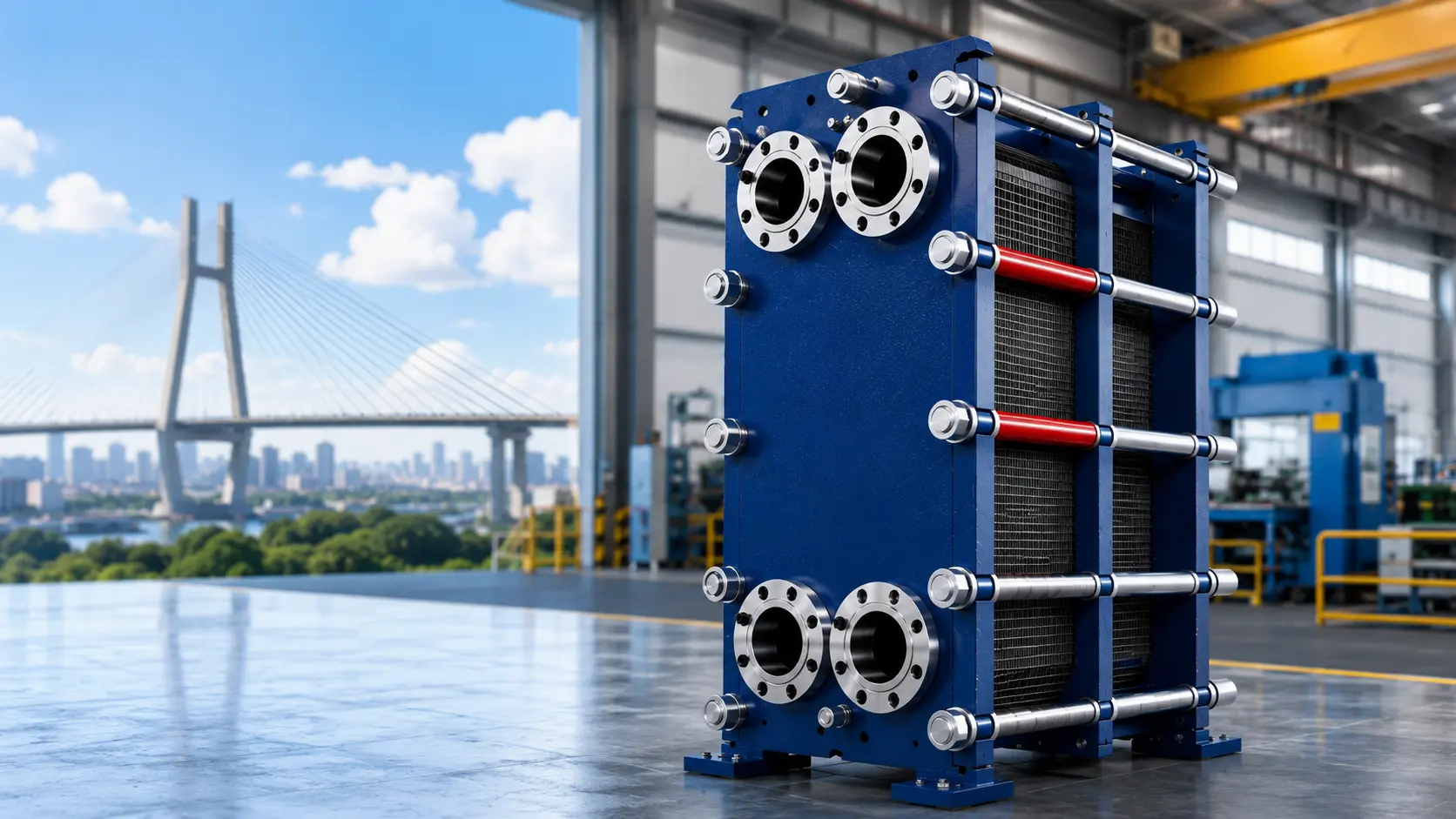
If you’re searching for plate heat exchanger manufacturers in Bhavnagar, you’re tapping into a district where marine salvage expertise, precision engineering, and competitive raw material access converge in ways few Indian cities can match. This guide moves beyond directory-style listings and gives you decision-ready information — whether you’re specifying a new PHE, replacing gaskets, or evaluating vendors across Bhavnagar’s GIDC zones.
Why Bhavnagar Became a PHE Manufacturing Hub
Most people associate Bhavnagar with ship-breaking at Alang, and that connection matters more than you’d expect. The Alang yard — Asia’s largest ship-breaking facility — created a massive secondary market for marine-grade stainless steel, titanium plates, and high-alloy metals. Over two decades, local engineering workshops leveraged this material supply chain to move into heat exchanger fabrication, reconditioning, and gasket manufacturing.
The result is a local ecosystem covering full-scale PHE assembly, gasket moulding, plate pressing, and reconditioning — all within a 60-kilometre radius. Established firms like Alfaz Marine and Marine Craft Exports anchor the cluster, while smaller workshops handle subcontract reconditioning and gasket work feeding both domestic and export chains.
Plate Heat Exchanger Manufacturers in Chitra GIDC — The Core Industrial Belt
Chitra GIDC is Bhavnagar’s primary industrial estate with over 200 registered units. For plate heat exchanger manufacturers in Chitra GIDC, this zone offers reliable three-phase power, internal roads suited for heavy transport, and proximity to Bhavnagar port for export shipments. The concentration of engineering workshops means subcomponent sourcing — frame plates, carrying bars, guide bars, tightening bolts — happens locally rather than requiring inter-city procurement.
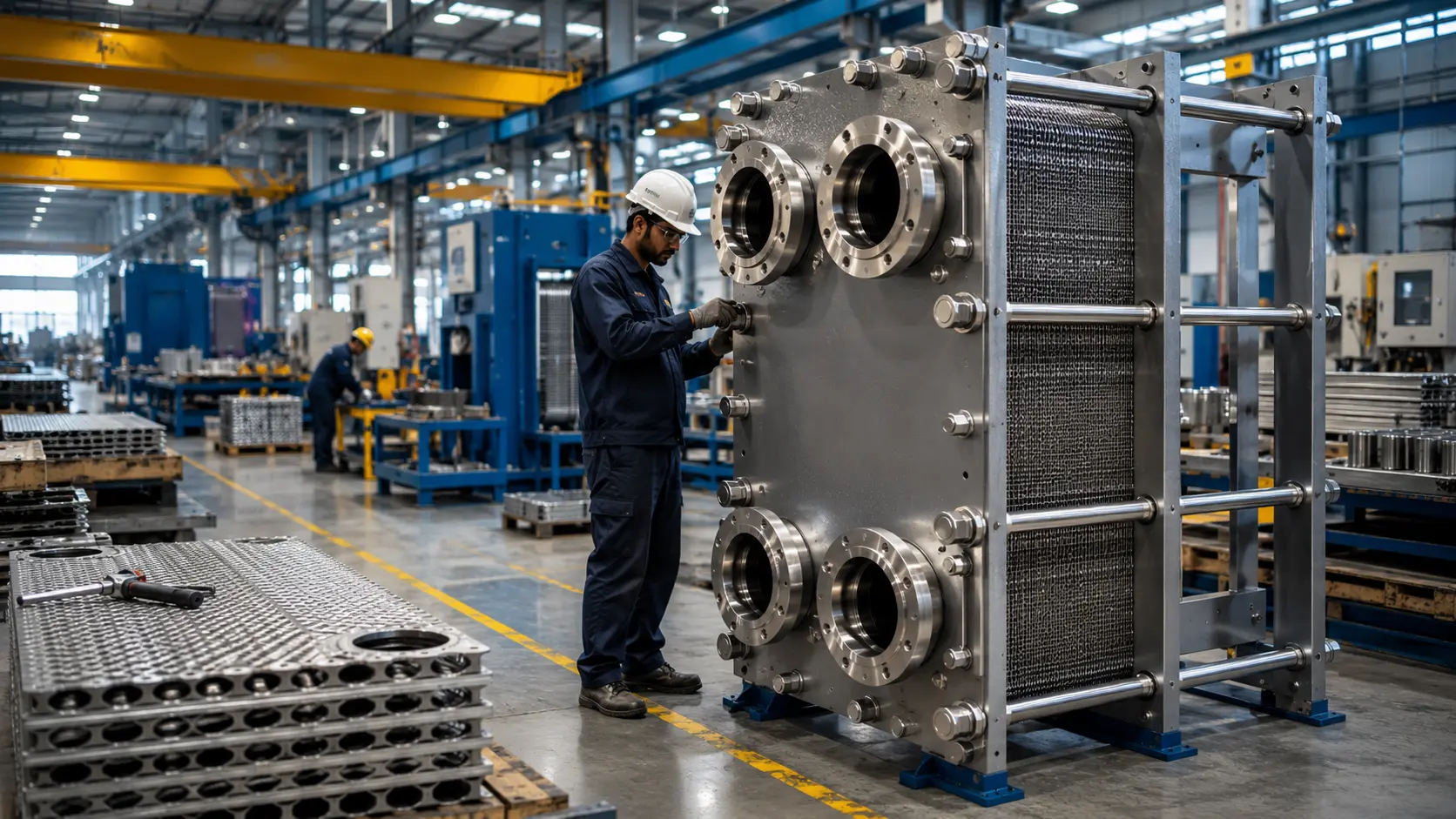
When visiting manufacturers here, walk the shop floor. Check for CNC plate-pressing capability (not just manual hydraulic presses), dedicated clean areas for gasket handling, and in-house pressure testing rigs. A manufacturer who outsources pressure testing adds lead time and loses quality control over the most critical validation step in PHE assembly.
Plate Heat Exchanger Suppliers in Mahuva GIDC — Coastal and Agro-Industrial Demand
Plate heat exchanger suppliers in Mahuva GIDC serve the agro-processing and coastal industries — fish meal plants, edible oil refineries, cold storage facilities, and salt works along southern Saurashtra. PHE requirements here typically involve smaller-capacity units (under 500 kW thermal duty) with high corrosion resistance for seawater-cooled or brine-handling applications.
Mahuva’s GIDC is compact (roughly 18 hectares, 54 plots), so many suppliers function as assemblers sourcing plates and frames from Bhavnagar or Ahmedabad. For end users in the Mahuva-Rajula-Talaja belt, a local service partner who responds within hours carries significant operational value.
PHE Gasket Manufacturers in Sihor GIDC — Material Selection and Mould Precision
Gaskets are the most frequently replaced PHE component, and choosing the right supplier matters as much as choosing the PHE manufacturer itself. PHE gasket manufacturers in Sihor GIDC benefit from the town’s generations-old tradition in precision metalwork and polymer processing.
A gasket seals against leakage, channels fluid flow into the correct alternating pattern between plates, and absorbs mechanical stress from frame compression. The critical evaluation factors are:
Elastomer grade — NBR (nitrile) handles most water and oil applications below 130°C. EPDM suits steam, hot water, and mild chemical duties up to 160°C. Viton (FKM) covers aggressive chemicals at higher temperatures but costs three to five times more. A reliable manufacturer asks about your process fluid, temperature range, and cleaning regime before recommending a grade.
Mould precision — PHE gaskets must match the plate profile exactly. Even 0.5 mm deviation causes uneven compression leading to leaks under operating pressure. Inspect the mould inventory and check whether moulds are maintained and recalibrated regularly.
Cure consistency — Under-cured gaskets lose sealing force within months. Over-cured gaskets crack during assembly. Consistent vulcanisation requires temperature-controlled presses with batch logging.
PHE Gasket Suppliers in Talaja GIDC — Bridging the Service Gap
PHE gasket suppliers in Talaja GIDC serve industries along the Bhavnagar-Mahuva corridor, handling a mix of marine retrofit work and food-grade replacement gaskets. The key question for buyers here is traceability — can the supplier provide elastomer material test certificates and batch records linking each gasket lot to specific moulding parameters? These are essential for operations under FSSAI, BIS, or ISO 22000 compliance frameworks.
Which PHE Type Suits Your Application?
Bhavnagar manufacturers produce several PHE configurations. Selecting the wrong type wastes capital and creates operational problems.
Gasketed PHEs remain most common for applications requiring regular inspection and cleaning — dairy plants, beverage facilities, HVAC systems. Plates can be added or removed to adjust capacity, and the entire unit disassembles for cleaning.
Brazed PHEs suit refrigeration and hydraulic oil cooling as sealed systems needing no gasket replacement. They’re compact and cost-effective but cannot be opened once fouled beyond chemical cleaning limits.
Semi-welded and fully welded PHEs handle aggressive chemicals, high pressures, or applications where gasket compatibility with the process fluid is problematic. Higher upfront cost, but the gasket as a failure point is eliminated.
When discussing requirements with manufacturers, always specify: process fluid, operating temperature and pressure, required thermal duty (in kW), allowable pressure drop, and fouling tendency. Any manufacturer who quotes without asking for these five parameters is guessing.
Maintenance Practices That Extend PHE Lifespan
A well-maintained PHE delivers 15 to 20 years of service, with gaskets replaced every 5 to 8 years. Key practices:
Monitor approach temperatures — when the gap between hot-side outlet and cold-side inlet starts increasing beyond design values, fouling has begun. Schedule cleaning based on temperature trending, not calendar intervals.
Follow the manufacturer’s torque sequence during re-assembly. Uneven bolt tightening is the single most common cause of gasket leaks after maintenance shutdowns. Tighten in a cross-pattern to the specified plate pack dimension.
Store spare gaskets away from direct sunlight, ozone, and temperatures above 40°C. Use them within the recommended shelf life — typically 3 to 5 years for NBR and EPDM.
Inspect plates for fatigue cracking at corner and port areas during every gasket change. Hairline cracks may not leak immediately but will fail under pressure transients.
How to Shortlist Bhavnagar PHE Manufacturers
Price alone is a poor selection criterion for industrial heat exchangers. A structured evaluation works better:
Verify manufacturing vs. trading — confirm in-house plate pressing, frame machining, and assembly capability. Both models work, but after-sales implications differ.
Check references in your industry — ask for three to five clients in your sector and follow up with at least two.
Assess spare parts availability — stocked gaskets and plates for immediate dispatch save days of downtime versus 3–4 week made-to-order lead times.
Plate heat exchanger manufacturers in Bhavnagar offer competitive material costs from the Alang ecosystem, skilled fabrication labour, organised GIDC infrastructure, and proximity to Gujarat’s chemical, dairy, and food processing corridors. Visit the facility, verify capability, insist on proper thermal sizing, and evaluate gasket quality independently before placing the order.